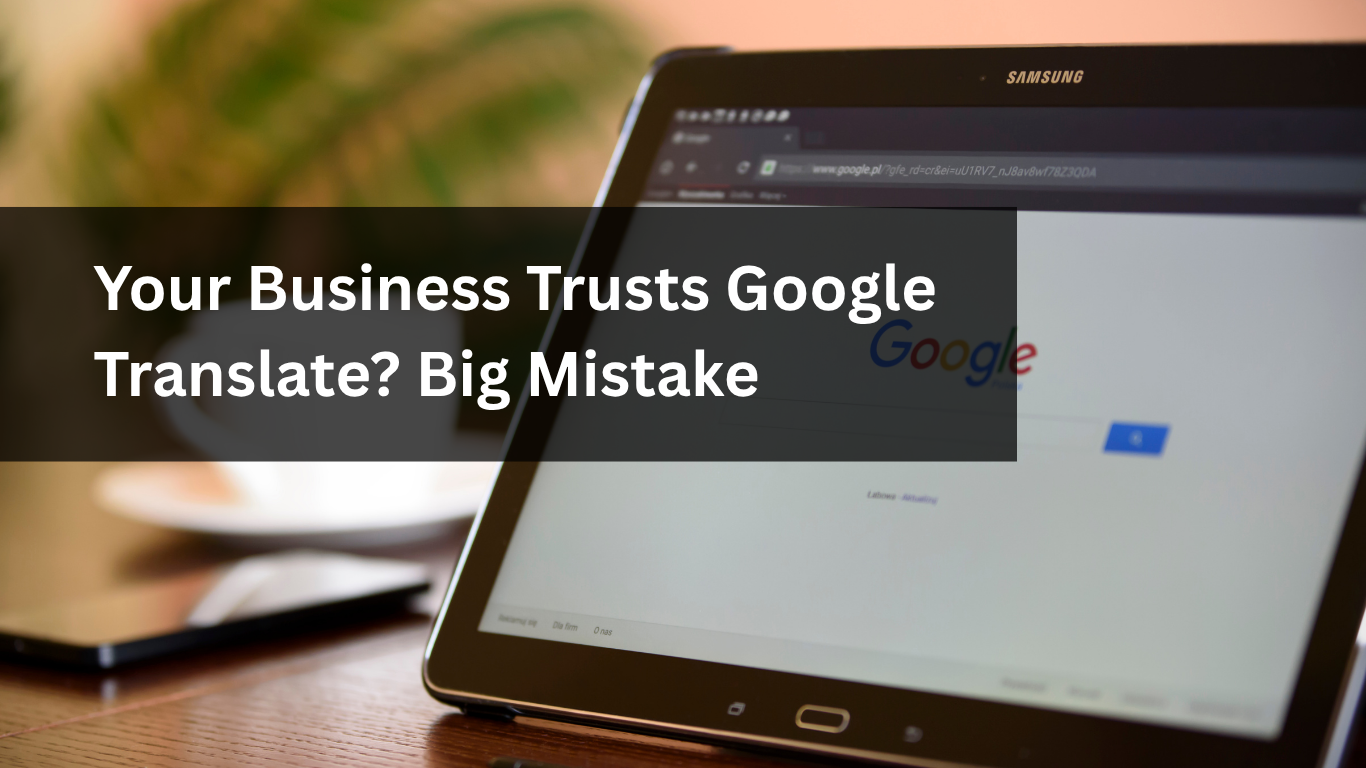
Your Business Trusts Google Translate – Big Mistake
Unlock Multilingual Communication with Accurate Translation Services
The Illusion of Convenience
Every business chasing international markets hits the same question: “Why pay for translation when Google does it for free?”
That little text box promising instant results feels like a miracle — until it isn’t.
Companies plug in contracts, product manuals, and marketing copy, trusting that machine translation will “do the job.” The result? Brand disasters, compliance violations, and cultural misunderstandings that cost real money.
Google Translate is fast. It’s accessible. But it’s also blind — blind to tone, culture, and context. And in business communication, those three things separate credibility from catastrophe.

The Global Translation Trap
Let’s face it — globalization made every company multilingual overnight. From tech startups in Bangalore to manufacturers in Chennai and law firms in London, global communication became mandatory, not optional.
And so businesses turned to what looked easiest: online machine translation.
It’s free, instant, and convenient. But when your company relies on automated tools to communicate in Arabic, Japanese, or German markets, you’re gambling your reputation on a guess.
Real-World Failures
Medical Device Labeling: A single mistranslated dosage instruction in an exported user manual led to regulatory recalls worth millions.
Legal Contract Translation: An AI-generated contract in Spain omitted a critical clause on indemnity — invalidating the agreement.
Marketing Campaigns Gone Wrong: One global beauty brand’s slogan meant “brings you closer to heaven” in English, but translated to “die beautifully” in Mandarin.
The cost of “free” translation can be astronomical.
Why Google Translate Fails Businesses ?
Google Translate isn’t malicious. It’s just not designed for enterprise precision. Its goal is communication in general, not compliance, marketing, or legal nuance.
1. Lack of Domain Expertise
Technical industries like engineering, medical, and legal require translators with deep subject knowledge. Machines don’t understand ISO compliance or FDA terminology — they just guess based on statistical patterns.
2. Context Blindness
Google Translate doesn’t “know” if your document is a software API guide or a financial disclosure. It simply replaces words.
Example: “Charge” could mean bill, accuse, or electrical load. Humans understand context — algorithms don’t.
3. Cultural Mistranslation
In marketing and user communication, tone is everything. What’s polite in Japan might sound overly casual in France. Machines don’t sense tone, humor, or politeness levels — they flatten everything into grammatical adequacy.
4. Data Security Risk
When businesses upload internal documents or client data into free tools, they risk leaking confidential information. Most machine translation APIs retain data for algorithm training. That’s a direct compliance breach for industries under GDPR or HIPAA.
5. No Accountability
When Google Translate makes an error, there’s no one to call. No quality assurance, no translator to verify, no correction process. You can’t blame an algorithm when your client sues for misrepresentation

The Human Edge in Translation
Now, let’s talk about what AI can’t replicate — human reasoning, cultural awareness, and domain expertise.
Professional translation is not just about replacing words. It’s about conveying meaning. Every sentence carries intent, tone, and implication. A skilled translator navigates these with experience and empathy.
1. Humans Understand Purpose
A contract translation differs from a product manual or a marketing tagline.
Humans adapt style, tone, and terminology based on why the text exists — something AI can’t infer.
2. Real Translators Manage Risk
Certified agencies like Quadrate follow multi-step QA workflows:
Translation by subject experts
Proofreading by linguistic reviewers
Formatting and DTP checks
Confidentiality via NDAs and encryption
That process doesn’t just ensure accuracy — it protects your brand and legal standing.
3. Tone and Emotion
Humans can adjust language to suit emotion — persuasive for marketing, formal for legal, technical for manuals. Machines? They don’t feel emotion, so they can’t translate it.
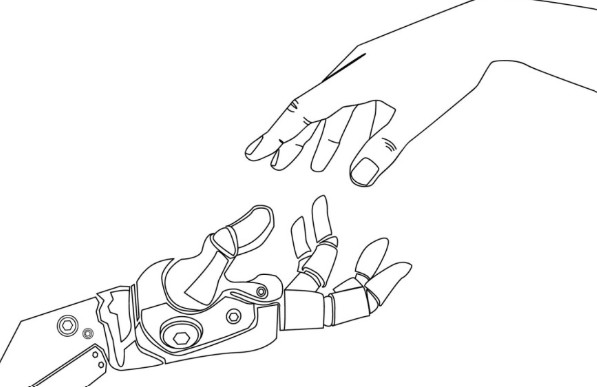
When AI and Humans Work Together
Here’s the good news — AI isn’t the enemy. It’s just an assistant that needs supervision.
Modern agencies use CAT tools (Computer-Assisted Translation) like SDL Trados Studio, MemoQ, and Smartcat to speed up workflows without sacrificing accuracy.
These tools use AI for repetition detection, glossary consistency, and error flagging — but humans still control the output.
At Quadrate, hybrid workflows combine AI-assisted pretranslation with human post-editing (MTPE) — ensuring speed, affordability, and accuracy.
The result?
30–50% faster project turnaround
100% terminology consistency
ISO-certified quality control
That’s AI with accountability.
The Hidden Cost of “Free” Translation
Businesses often overlook what’s lost when using free tools — trust.
1. Lost Brand Voice
A brand’s tone — witty, formal, empathetic — is built on deliberate language choices. Machine translation flattens that identity, making all brands sound the same: robotic.
2. Regulatory Fines
Industries like medical devices, finance, and pharma require certified translation under ISO 17100 or ISO 13485. Google Translate can’t meet these standards. Non-compliance equals penalties.
3. Reputation Damage
A mistranslated tagline or safety instruction can spread across social media within hours, turning your brand into a meme instead of a market leader.
4. Rework Costs
Companies that use free translations often end up paying double — once for the AI-generated version, then again for a professional agency to fix it.
Localization – Beyond Translation
Translation says the same thing in another language.
Localization makes it feel native.
Example:
A payment app translating “Add to Cart” into Hindi might use “कार्ट में जोड़ें” — accurate, but unnatural. A localized version might use “खरीदारी में जोड़ें,” which feels natural and aligns with real user behavior.
Localization considers culture, color symbolism, date formats, and even UI layouts.
That’s why human localization experts remain irreplaceable — they understand how people think, not just how they speak.

Data, Security, and Confidentiality
One overlooked issue: data security.
When you upload documents to public tools like Google Translate, you’re handing over proprietary data to a system that stores input for algorithmic training.
Professional agencies like Quadrate, however, ensure:
End-to-end encryption
NDA-backed confidentiality
In-house linguist management (no freelancers uploading to public clouds)
Secure delivery via encrypted file transfer
That’s why major enterprises and government departments refuse to use free tools — not out of arrogance, but out of compliance necessity.
India’s Translation Industry – The New Epicenter
India, especially cities like Chennai, Mumbai, Pune, and Bangalore, is emerging as a global translation powerhouse.
Quadrate leads this space by combining ISO-certified quality, native linguists, and AI-assisted workflows to deliver professional translations for:
Engineering & Manufacturing Manuals
IT & Software Documentation
Medical Device Instructions
Legal Contracts
Educational & E-learning Material
Each project undergoes multi-tier linguistic QA, domain expert verification, and DTP formatting to mirror source design — ensuring complete readiness for print or digital use.

Smart Business – Machine-Assisted, Human-Perfected
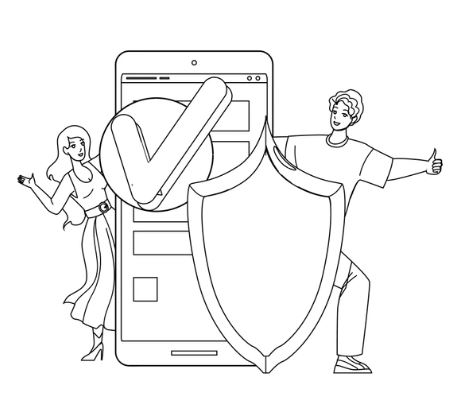
Forward-thinking businesses are evolving. They’re no longer choosing between AI and humans — they’re combining both.
Quadrate’s AI + Human Translation Model delivers:
AI-speed pretranslation for cost efficiency
Human editing for contextual accuracy
Terminology management through Trados, MemoQ, and QA Distiller
DTP design for visually perfect documentation
The future isn’t machine-only or human-only — it’s collaborative intelligence.
Conclusion:
The Real Cost of “Good Enough”
When you’re translating for business, “good enough” isn’t.
Google Translate might help you order coffee abroad or read a meme, but it can’t protect your contracts, regulatory documents, or brand image.
Every mistranslated sentence erodes trust — something no algorithm can rebuild.
Your message deserves clarity. Your brand deserves accuracy. Your customers deserve understanding.
That’s why the world’s most trusted companies rely on certified human translators — not convenience apps.
Request a Free Quote Today | 24/7 Availability | Serving Pan-India | Certified Translators & Localization Experts