
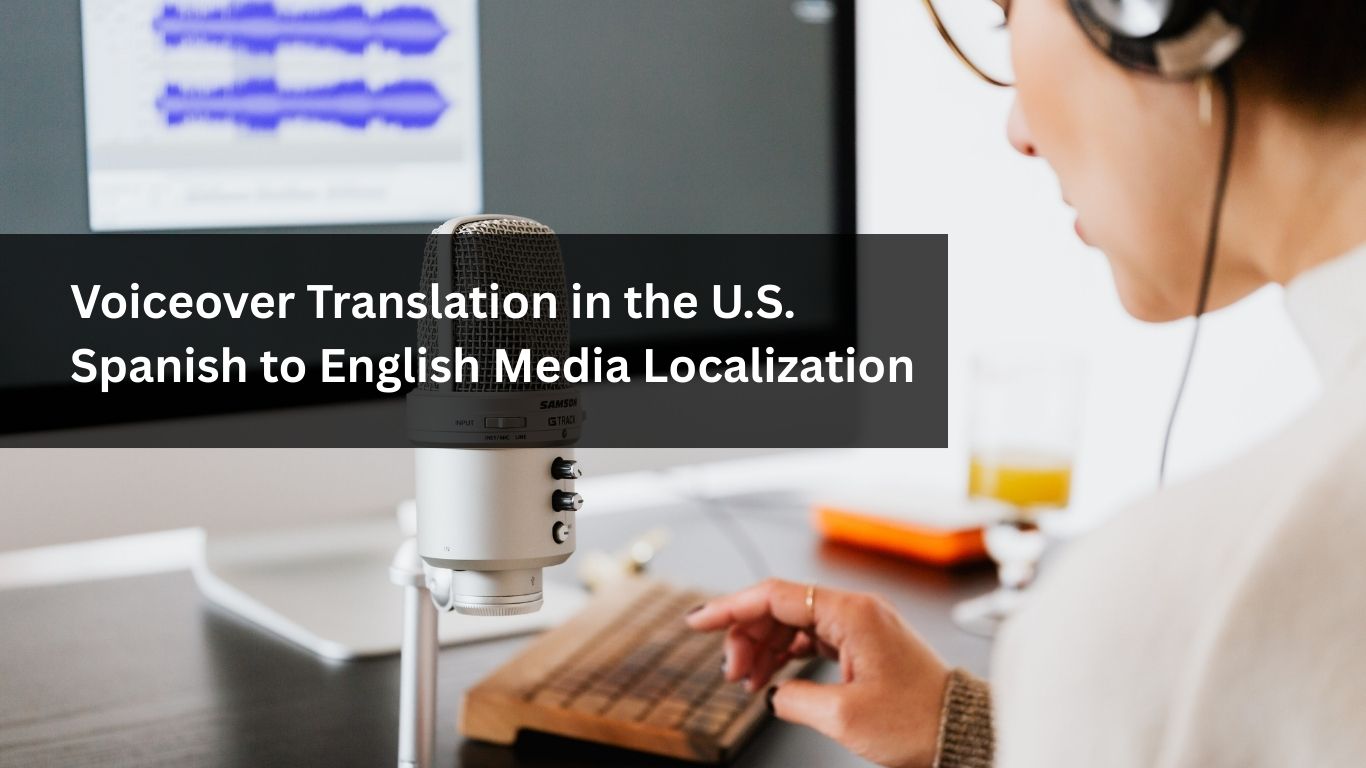
Voiceover Translation in the U.S. : Spanish to English Media Localization
Unlock Multilingual Communication with Accurate Localization & Translation Services
Why Voiceover Translation in the U.S. Is a Strategic Growth Engine ?
Voiceover Translation in the U.S. is no longer a niche production service. It is a core revenue driver across streaming platforms, broadcast networks, digital publishers, advertising agencies, eLearning providers, and AI-first content companies.
The United States is home to more than 60 million Hispanic residents, making it the second-largest Spanish-speaking population in the world after Mexico. That demographic reality is reshaping media economics.
Spanish–English localization is no longer about “expanding reach.” It is about market survival.
From Hollywood studios to YouTube creators, from corporate training platforms to fintech apps, bilingual media is now an expectation, not an add-on. Add to that the rise of AI voiceover technology and large language models (LLMs), and we are witnessing a structural transformation in how voice content is produced, localized, and distributed.
This article explores:
The economic drivers behind Voiceover Translation in the U.S.
The growth of Spanish-English localization
The impact of AI voiceover and LLM-based media workflows
Regional U.S. media hotspots
Human vs AI voiceover dynamics
Future trends shaping 2026 and beyond
If you operate in media production, localization services, AI development, or marketing strategy, this shift directly affects your roadmap.


The Expanding U.S. Spanish-Speaking Audience
Demographic Growth and Media Consumption
The U.S. Hispanic population represents nearly 19% of the total U.S. population. More importantly, it is one of the youngest demographics, with higher digital adoption and streaming engagement compared to national averages.
This translates into:
Higher streaming platform usage
Increased bilingual content consumption
Strong social media engagement
Growing purchasing power (over $2 trillion annually)
Spanish-English media is not simply about translation. It is about cultural positioning.
Bilingual Media Is Mainstream
Platforms like Netflix, Amazon Prime Video, Disney+, and YouTube increasingly provide:
Spanish dubbing
Neutral Latin American Spanish voiceovers
U.S. Spanish adaptations
Subtitles plus dubbed versions
This shift signals a structural change in Voiceover Translation in the U.S.: voice localization is moving upstream into production planning.
Instead of translating after content release, companies are designing bilingual workflows from day one
Defining Voiceover Translation in the U.S.
Voiceover Translation in the U.S. refers to the process of:
- Translating scripted content from one language to another
- Adapting it culturally for target audiences
- Recording voice talent in the target language
- Synchronizing audio with video
- Mixing and mastering localized sound
It includes:
Dubbing
Narration replacement
E-learning voiceover
Corporate training modules
Advertising voice localization
Documentary voiceover
Streaming series adaptation
Spanish-English localization dominates U.S. voiceover translation demand :
- Market size
Advertising revenue
Streaming competition
Government and healthcare communication needs


The Economics of Voiceover Translation
Why Companies Invest in Localization ?
Voiceover translation drives measurable ROI:
Higher audience retention
Expanded subscription growth
Increased ad revenue
Improved brand trust
Market penetration in bilingual communities
For streaming platforms, localized audio increases completion rates significantly compared to subtitles alone. For brands, Spanish-language voice campaigns increase emotional resonance and conversion in Hispanic markets.
Cost Structures
Traditional voiceover translation involves:
Script translation and adaptation
Casting voice talent
Studio recording
Post-production editing
Quality assurance
AI voiceover technology is changing the cost equation.
AI reduces:
Studio rental expenses
Voice talent scheduling delays
Multi-region versioning costs
However, it introduces new costs:
Licensing AI models
Voice cloning permissions
Compliance and ethical oversight
Post-editing and quality checks
The economics are shifting from labor-intensive production to hybrid AI-human workflows.
AI & LLM Impact on Media Localization
AI Voiceover Technology Explained
AI voiceover systems use:
Text-to-speech (TTS) models
Neural voice synthesis
Voice cloning
Speech-to-speech translation
LLM-based script adaptation
Major technology players shaping this space include:
OpenAI (text generation and speech models)
Google DeepMind
Amazon Web Services
Microsoft Azure AI
ElevenLabs (AI voice synthesis platform)
LLMs now support:
Script rewriting
Cultural nuance adaptation
Tone modification
Lip-sync optimization
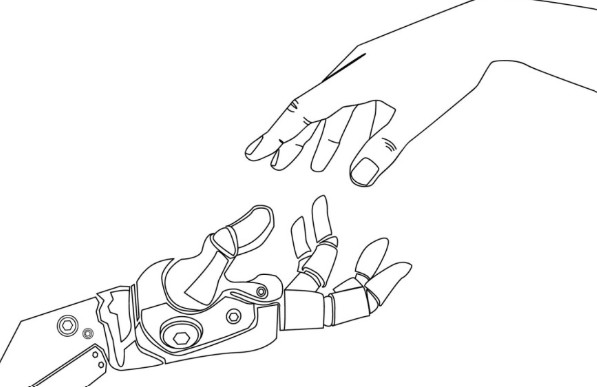
AI is not just reading translated text. It is reshaping scripts for contextual alignment.
AI-Driven Localization Workflows
Modern media localization pipelines include:
- Automated transcription
- Machine translation
- LLM-based contextual adaptation
- AI voice synthesis
- Human quality review
- Audio mastering
This hybrid model significantly accelerates turnaround time.
For high-volume platforms, speed equals competitive advantage.


Streaming Platforms & Bilingual Demand
Streaming wars intensified localization spending.
Platforms competing for Hispanic audiences include:
Netflix
Hulu
Disney+
Amazon Prime Video
Peacock
HBO Max
These platforms invest in:
U.S.-Spanish voiceovers
Latin American Spanish versions
English re-dubbing for Spanish-origin content
Spanish-language originals are now crossing into English markets. The reverse is also true. This bilateral flow increases demand for Voiceover Translation in the U.S. exponentially.
Media Localization Trends Shaping 2026+
1. Hyper-Personalized Voiceovers
AI allows:
Personalized ads with dynamic voice generation
Regional accent targeting
Micro-segment audience adaptation
2. Real-Time Speech Translation
Live streaming platforms are experimenting with:
Real-time voice translation
Multilingual broadcast overlays
AI simultaneous dubbing
3. Cross-Border Content Syndication
Spanish-language U.S. content is being exported globally.
This increases demand for:
Multi-language voiceover translation
Regional dialect adaptation
Cultural re-editing
4. AI-Enhanced Voice Actors
Voice actors are licensing digital replicas of their voices.
This creates:
Passive income streams
Scalable voice usage
Hybrid AI-human creative partnerships


Regional U.S. Media Hotspots
Voiceover Translation in the U.S. is geographically concentrated.
Los Angeles, California
Entertainment capital
Film and television production hub
Major dubbing studios
Hispanic population influence
Miami, Florida
Latin American media gateway
Spanish-language broadcasting center
Advertising localization hub
New York City, New York
Advertising agencies
Streaming platform offices
Corporate training production
Multilingual publishing
Houston, Texas
Growing Hispanic population
Energy sector corporate training localization
Regional advertising markets
Chicago, Illinois
Healthcare communication demand
Government translation services
Public education localization
Localized demand patterns matter for service providers optimizing SEO and GEO visibility.
Human vs AI Voiceover: Opportunities and Challenges
Strengths of Human Voiceover
Emotional nuance
Cultural sensitivity
Improvisational adaptation
Performance authenticity
Human voice actors excel in:
Drama
Commercial persuasion
Documentary storytelling
Character-based content
Strengths of AI Voiceover
Scalability
Rapid deployment
Cost efficiency
Version control
24/7 production capability
AI excels in:
Corporate training
Internal communications
Large-scale video libraries
Product explainers
E-learning modules
Ethical and Legal Considerations
Voice cloning raises legal questions:
Consent requirements
Compensation structures
Copyright ownership
Deepfake misuse
Regulatory clarity will become a major factor shaping AI voiceover growth.

Strategic Takeaways for Businesses
- Bilingual production planning must start at script stage.
- AI integration is unavoidable, but human oversight remains essential.
- Spanish-English localization should be part of brand strategy, not post-production.
- GEO-focused SEO improves visibility for regional voiceover services.
- Ethical AI policies will differentiate trusted providers from risky vendors.
FAQ Section – Voice Over Translation in US
1. What is Voiceover Translation in the U.S.?
Voiceover Translation in the U.S. refers to translating and recording spoken audio content into another language, primarily Spanish-English, for media, streaming, advertising, and corporate communications.
2. Why is Spanish-English localization growing in the U.S.?
Growth is driven by the expanding Hispanic population, increased streaming consumption, and advertising demand targeting bilingual audiences.
3. Is AI replacing human voice actors?
AI is augmenting workflows, especially for scalable content. Human voice actors remain essential for emotionally complex and performance-driven media.
4. How does AI voiceover improve media localization?
AI accelerates script adaptation, reduces production costs, enables fast versioning, and supports large-scale multilingual deployment.
5. Which U.S. cities lead in voiceover translation services?
Los Angeles, Miami, New York City, Houston, and Chicago are major hubs for bilingual media production and localization services.
6. What industries use voiceover translation the most?
Streaming platforms, advertising agencies, eLearning providers, healthcare institutions, government agencies, and corporate training organizations.

Conclusion
Quadrate enters the market with a clear purpose: to deliver precise, scalable, and AI-integrated translation and localization services built for modern global businesses. In an era where bilingual media, cross-border commerce, and multilingual communication define competitive advantage, localization is no longer optional infrastructure. It is strategic growth architecture. With structured quality control, technology-driven efficiency, and domain expertise, Quadrate is positioned to support enterprises that require both accuracy and scalability.
The objective is not to be just another translation vendor. The objective is to become a trusted localization partner for organizations operating in high-growth, multilingual markets. Quadrate is live. The work begins now
Request a quote. Submit documents securely. Get it right the first time.
Get Your Urgent Translation Now → [Upload Your File / Get a Quote]
Request a Free Quote Today | 24/7 Availability | Serving Pan-India & Worldwide Clients | Certified Voice-over & Localization Experts