The Untold Truth About Corel & Framework Translation Nobody in Tech Talks About
Unlock Multilingual Communication with Accurate Translation Services
The Translation Revolution Tech Forgot
While every company chases AI, cloud, and DevOps trends, there’s one silent revolution reshaping the global software ecosystem — Corel and Framework Translation. You don’t hear about it in mainstream tech blogs, yet it’s the lifeline of global software distribution, engineering collaboration, and product compliance.
Think of it as the linguistic backbone of digital infrastructure. From India’s booming IT corridors in Bengaluru and Pune to German automotive labs and Japanese robotics firms, engineers depend on accurate translation of frameworks, SDKs, and code-level documentation. One misinterpreted line can break a system, stall compliance, or spark millions in losses.
This is where Quadrate, India’s global translation powerhouse, comes in — bridging human expertise with AI-powered precision for technical, certified, and framework-level localization.


The Overlooked Backbone of Global Collaboration
In today’s digital ecosystem, documentation isn’t optional. Whether it’s a CorelDRAW file guiding product design or a software framework outlining APIs and dependencies, translation ensures that knowledge doesn’t get lost between teams and time zones.
Corel files (.CDR, .CMX, .CPT) are often the design blueprints for marketing, product packaging, and interface elements. Framework documentation, meanwhile, is the rulebook of development — architecture notes, dependency trees, API lists, configuration parameters.
When that material crosses borders, translation is the only thing keeping chaos out of the release cycle. One misinterpreted parameter or mislabeled design layer can cost weeks of rework and thousands in production delays.
Why Framework Translation Is Harder Than It Looks
Framework documentation is dense, layered, and filled with domain-specific terms. Translating it isn’t just a matter of swapping words. A translator has to understand the logic — where a “container” could mean a UI element, a Docker instance, or a memory structure, depending on context.
AI tools are getting better, but they’re not infallible. Machines don’t understand nuance or code references the way a developer does. A missed tag or mistranslated class name can derail an entire integration.
That’s why companies now rely on bilingual engineers and domain-trained linguists — professionals who treat translation like debugging: every line, every label, verified.

Inside the Corel Translation Process
Corel translation has its own maze. Designers in India, Japan, and Europe depend on CorelDRAW for layout design, schematics, and interface artwork. Translating these files means dealing with layered vector graphics, embedded fonts, and linked text fields that don’t behave the same way across languages.
A simple change from English to German can expand text length by 30%, breaking layouts. Asian scripts like Japanese or Korean require font substitution and spacing recalibration.
The solution isn’t just translation — it’s desktop publishing engineering (DTP). Translators and designers coordinate to preserve visual fidelity while adapting linguistic structure. It’s the art of making multilingual design look seamless.
Framework Translation in Action
Let’s take a software company building an IoT management platform. Their documentation includes:
Developer guides in Markdown and XML
Integration frameworks for embedded systems
API references with sample code
User manuals with annotated screenshots
Now, imagine this platform is being localized for markets in Japan and France. Translating that content means:
Keeping code snippets untouched
Translating comments, examples, and parameter explanations
Rebuilding diagrams or UI images in local languages
The team can’t rely on Google Translate. They use translation memory tools like Trados or MemoQ that store approved technical terms. Then, engineers run QA automation to verify syntax integrity. It’s clinical, time-consuming work — and it’s invisible to everyone except those who know what goes wrong when it’s skipped.
Why India Is Quietly Leading This Space
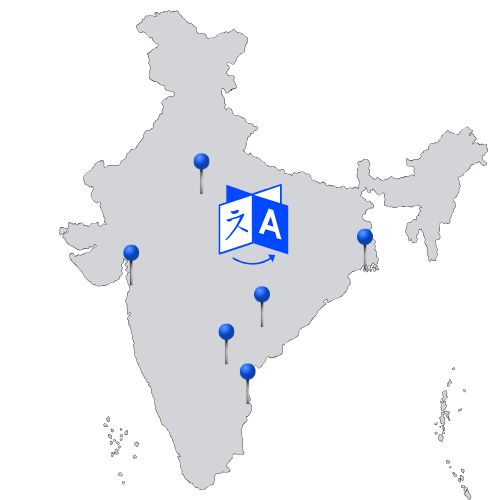
Here’s the part nobody admits: a large percentage of global technical documentation flows through India. With its bilingual workforce and IT-heavy economy, India has become the unseen production house for global translation and localization.
From Bengaluru’s tech corridors to Pune’s design studios, Indian professionals handle Corel artwork adaptation, engineering document translation, and framework localization. They do it with a mix of linguistic expertise and software fluency — a combination still rare in Western markets.
It’s not cheap labor driving it anymore. It’s domain literacy. When an Indian translator reads “assembly,” they know whether it means manufacturing, .NET, or mechanical design — context that machines still can’t parse.
The Invisible Risks of Getting It Wrong
The cost of mistranslation in technical work is brutal. An incorrectly labeled valve in an industrial manual, a mistranslated “ON/OFF” toggle, or a swapped API parameter can lead to product recalls, regulatory violations, or downtime.
In design, the risks are subtler but just as real. Inconsistent translations across product packaging or UI text erode brand trust. A single misrendered character in a Corel file printed on thousands of boxes? That’s an expensive mistake to fix.
Translation isn’t a luxury service; it’s risk management.

Human and Machine: Finding the Balance
AI translation tools have evolved fast, but they still lack domain-specific intelligence. Human translators bring context; machines bring scale. The future lies in hybrid translation workflows — AI for first-pass drafts, human experts for QA and domain correction.
Tools like Smartcat and DeepL API are now being integrated directly into design and development pipelines, but final sign-off still belongs to professionals who understand both syntax and semantics.
The truth nobody talks about: translation is becoming a software engineering discipline in itself.a
A Day in the Life of a Framework Translator
A framework translator doesn’t just read words. They:
Cross-check every function, comment, and reference
Keep a multilingual glossary synced with engineering teams
Manage file formats like XML, JSON, and Markdown
Use automation scripts to validate outputs
They move between two worlds — code and language. It’s part linguistics, part system architecture. A good one is invisible until something breaks, and then they’re the only one who can fix it.

How Localization Testing Keeps It All Together
After translation, every manual, guide, or Corel file goes through localization testing. Engineers check whether links work, labels fit, and text renders properly on different systems. QA teams simulate end-user experiences in multiple languages.
In frameworks, they test whether translated documentation still compiles correctly with auto-generated docsets. For Corel files, they verify whether exported PDFs maintain font integrity and vector alignment.
This is where translation stops being “language work” and becomes product validation.
The Future of Framework and Corel Translation
The next decade will see translation embedded into design and development tools. Frameworks will auto-detect documentation language needs. CorelDRAW could integrate live translation memory. AI models will be trained on domain-specific technical content rather than general text.
But even then, human validation won’t vanish. Translating frameworks and design systems is as much about trust as it is about text. Every engineering release will still need that final human eye to confirm that the language means what the system intends.

Conclusion:
Apps – Cross your borders with Framework translation
The tech industry celebrates innovation but forgets communication. Every piece of translated documentation — every Corel file and framework note — is a handshake across borders. Nobody talks about Corel and framework translation because it’s quiet work. It happens in the background, far from product launches or press releases. Yet it’s what makes every global software update, every design export, and every multilingual system possible.
Behind every clean translation lies a translator who understands both the language of code and the code of language. That’s the truth the industry never headlines — but it’s the one that keeps the world’s systems talking to each other.
Get Your Urgent Translation Now → [Upload Your File / Get a Quote]
Request a Free Quote Today | 24/7 Availability | Serving Pan-India | Certified Translators & Localization Experts