The Future of Translation Workflows: What the Next 10 Years Will Really Look Like ?
Unlock Multilingual Communication with Accurate Translation Services
Introduction: Why Translation Workflows Are About to Change Forever
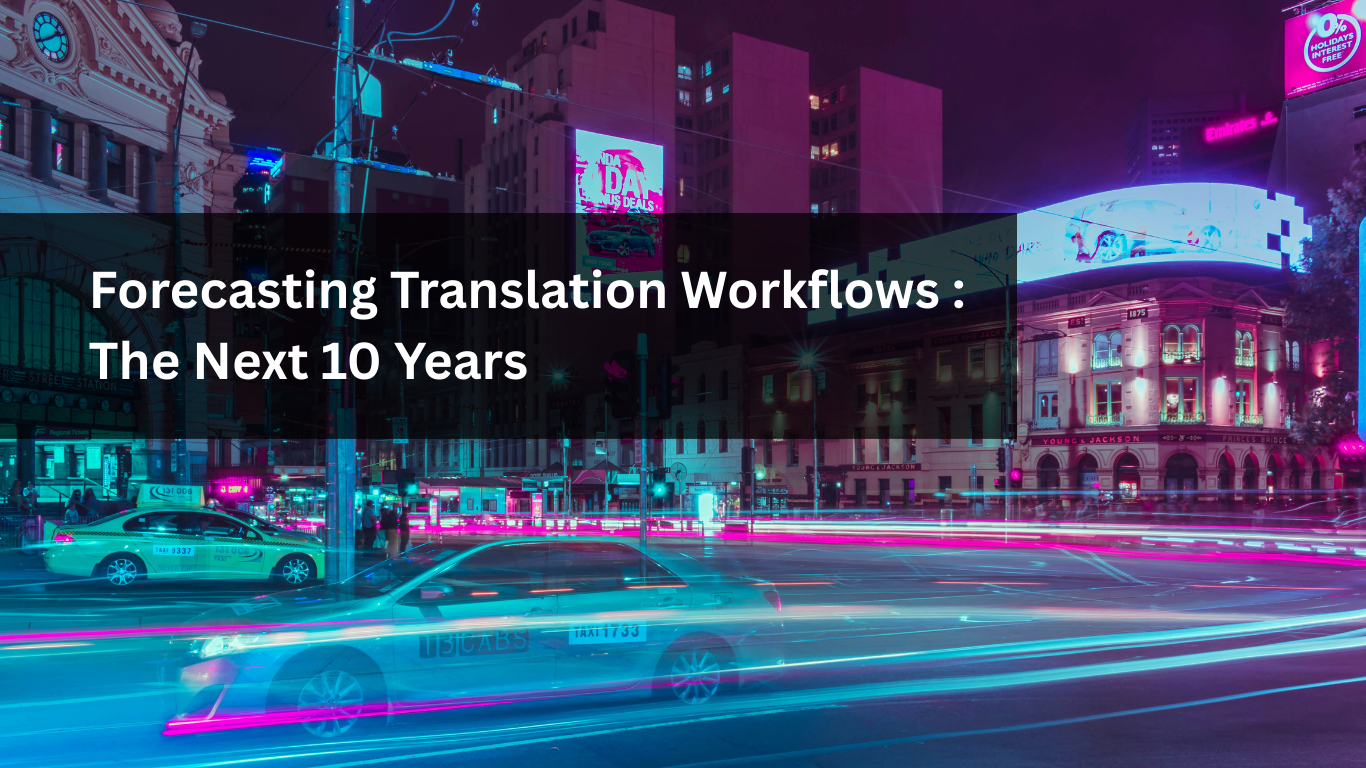
Forecasting Translation Workflows: The Next 10 Years
The world is moving faster than ever, and so is the translation industry. With AI, neural machine translation (NMT), and automated workflows, the way content is localized is undergoing a massive transformation.
Businesses that fail to adapt risk inefficiency, higher costs, and lost opportunities. Those that embrace the next-generation translation workflows will dominate global markets.

The Shocking Trends Shaping Translation
Workflows for the Next Decade
1. AI and Neural Machine Translation Will Become the Backbone
Neural machine translation (NMT) is already revolutionizing the industry.
Over the next 10 years, AI will handle bulk translation, freeing human experts for creative and industry-specific tasks.
Prediction: 70-80% of routine translations will be AI-driven, making workflows faster and more cost-effective.
2. Hybrid Workflows: Humans + AI Collaboration
Pure AI is not enough — human expertise remains critical, especially for legal, medical, and technical content.
Expect hybrid workflows where AI pre-translates content and humans review, adapt, and localize for accuracy and cultural relevance.
3. Automation in Project Management
Translation management systems (TMS) will automate task allocation, quality checks, and reporting.
Businesses will spend less time coordinating teams and more time scaling global content efficiently.
4. Multilingual SEO and AI-Optimized Content
Translators will also act as SEO specialists, optimizing multilingual content for local search engines.
AI will suggest keywords, tone adjustments, and cultural nuances, reducing errors and increasing visibility.
The Industries Leading the Change
Certain sectors will experience dramatic shifts in translation workflows:
E-commerce & Retail – Real-time translation of product catalogs, reviews, and marketing campaigns.
Healthcare & Life Sciences – Automated translations of clinical trials and medical documentation with regulatory checks.
Technology & Software – Continuous localization of apps, software updates, and user interfaces.
Legal & Financial Services – AI-assisted translation with strict compliance workflows.

The Tools That Will Dominate the Next 10 Years
AI-Powered Translation Memory (TM): Predictive text suggestions for faster translation.
Cloud-Based Collaboration Platforms: Seamless global team coordination.
Automated QA Tools: AI checks for grammar, terminology, and regulatory compliance.
Voice-to-Text & Multimedia Localization Tools: Translating audio, video, and visual content efficiently.
Common Mistakes Businesses Will Still Make
Even with advanced workflows, companies can falter:
Over-relying on AI without human oversight.
Ignoring industry-specific terminology and cultural nuances.
Failing to integrate multilingual content into marketing and sales strategies.
The next decade favors strategic adaptation, not just technology adoption.
Predictions:
What Translation Workflows Will Look Like in 2035
Fully Integrated Workflows Across Platforms: Content creation, translation, and publishing in one automated pipeline.
Real-Time Translation for Global Teams: Instantaneous cross-lingual communication across business units.
Personalized Localization: AI adapts content for individual user preferences and behaviors.
Data-Driven Translation Quality: Analytics will guide translation decisions, increasing ROI.
Sustainability in Translation: Reduced redundancies, cloud-based storage, and eco-conscious workflows.


How Companies Can Prepare Today ?
Invest in AI-assisted translation tools.
Train teams in hybrid human + AI workflows.
Implement translation management systems for workflow efficiency.
Keep up with industry trends and multilingual SEO practices.
The future of translation is not about replacing humans — it’s about amplifying human expertise with AI and automation.
Conclusion:
The Next 10 Years Will Reward the Adaptive
Translation workflows are evolving faster than ever.
Businesses that adopt hybrid AI-human workflows, automation, and industry-specific localization strategies will dominate global markets.
The big question: Are you ready to adapt, or will your translation strategy fall behind?
Ready to translate the right way? Let’s talk.
Explore Translation Services at Quadrate | Get a Free Translation Quote | Linked In