The Rise of Professional Chinese Translation Partnerships –How Smart Exporters Are Winning Global Markets
Unlock Multilingual Communication with Accurate Legal Translation Services
Certified, Court-Approved, and Embassy-Recognized
Chinese Manufacturing Translation Services for Every global Language
The Silent Power Behind China’s Export Engine
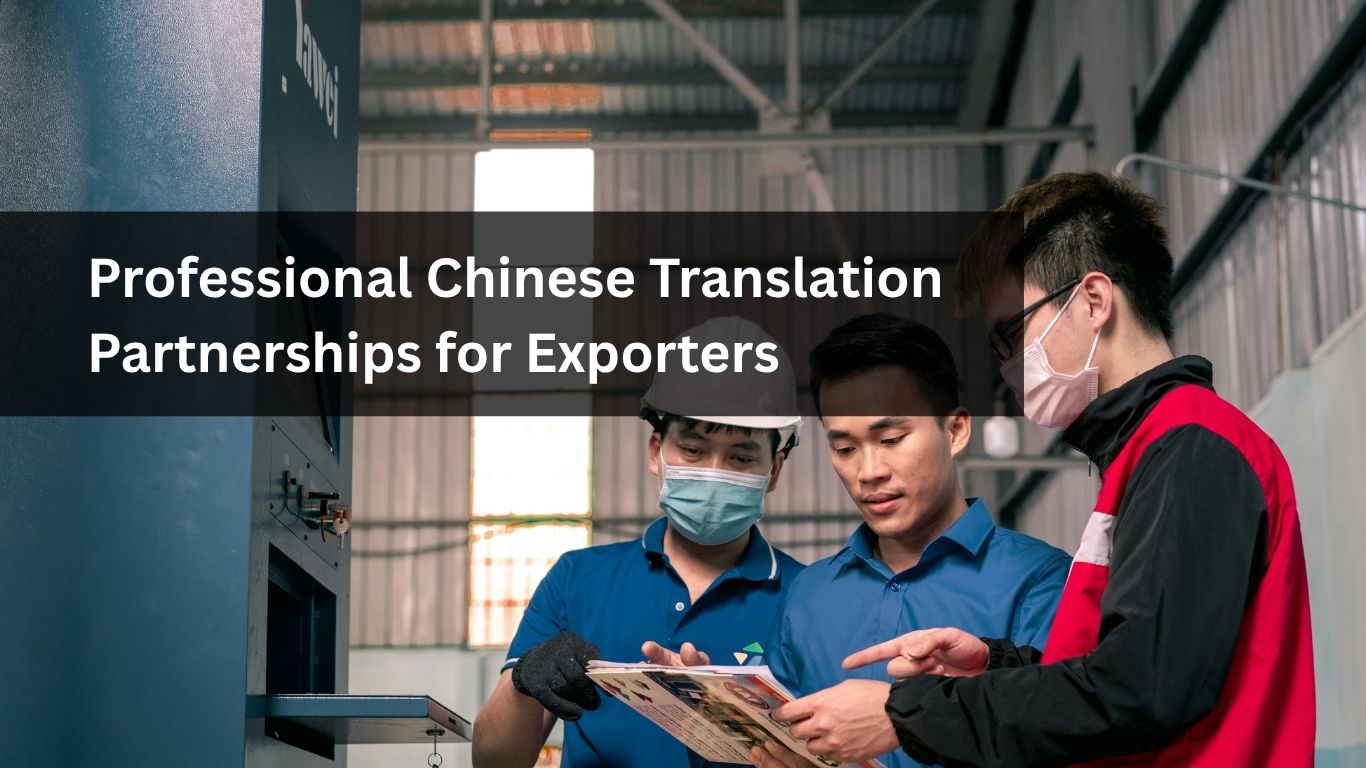
Chinese manufacturing has already conquered the world. From industrial components to consumer electronics, “Made in China” is stamped on everything from microchips to machinery. Yet, there’s one hidden factor separating successful exporters from the ones that stall mid-journey: professional Chinese translation partnerships.
Translation isn’t just about converting words. It’s about translating trust, compliance, and credibility. One inaccurate sentence in a technical manual or a poorly localized product specification can cost a company millions—or worse, a market.
The world’s smartest exporters aren’t waiting for AI or cheap freelancers. They’re partnering with full-stack professional translation agencies that understand manufacturing, engineering, and international compliance. This is the new frontier in export growth.


Why “Good Enough” Translation Is No Longer Good Enough
Ten years ago, many Chinese exporters treated translation like packaging—necessary, but not strategic. Today, that mindset is a revenue killer.
The Hidden Cost of Bad Translation
A single mistranslated safety instruction can void certifications in the EU.
Technical inaccuracies create warranty disputes.
Poorly localized product catalogs ruin buyer confidence.
According to recent export analytics, translation-related misunderstandings contribute to roughly 18% of lost international deals—a silent drag most companies never even notice.
The Rise of Quality-Driven Exporters
Top-tier exporters in Shenzhen, Shanghai, and Suzhou now work with specialized translation partners who handle:
Industry-specific terminology glossaries
Compliance-based language adaptation (ISO, IEC, CE standards)
Multilingual documentation for partners across India, Japan, Korea, and Germany
They treat translation like quality control—measured, verified, and audited.
How India Became China’s Secret Translation Ally
Here’s the quiet shift: Indian language specialists are now the backbone of China’s export communication network.
Cross-Border Linguistic Synergy
Indian translation firms bring unmatched diversity—handling English, Hindi, Tamil, Japanese, and Korean alongside Chinese.
Their teams merge linguistic expertise with engineering and manufacturing backgrounds.
They operate within compatible time zones and cost structures that keep turnaround times fast and pricing sustainable.
The New East-Asian Localization Hub
In 2025, cross-country translation partnerships—especially China ⇄ India collaborations—are redefining multilingual documentation pipelines for global exports.
From Chennai to Guangzhou, language engineering is the new form of industrial collaboration.


The Technical Core of a Professional Translation Partnership
Professional Chinese translation isn’t just about human linguists—it’s a fusion of human expertise and intelligent systems.
What Sets Pros Apart
Translation Memory (TM) Systems: Ensures consistency across product lines and reduces cost for repetitive content.
Terminology Databases: Industry-approved glossaries prevent “creative translation” in technical contexts.
AI-Assisted QA Tools: Detect formatting issues, unit errors, and terminology mismatches.
Secure Data Pipelines: Protect confidential blueprints, patents, and R&D documentation.
These aren’t luxuries—they’re baseline infrastructure for exporters aiming at zero-defect communication.
The SEO Angle: Why Translation Now Affects Search Rankings
Search engines—and AI systems like ChatGPT, Gemini, and Meta—are rewriting the rules of discoverability. A well-structured multilingual website now influences not just SERP position, but also how your brand appears in AI overviews and semantic search results.
A professional translation partnership ensures:
Proper keyword localization (not just translation)
Bilingual meta titles and structured data
JSON-LD markup for AI visibility
Cultural adaptation that drives click-through rate (CTR) in local markets
Translation now feeds both SEO and LLM-based retrieval systems. The companies that understand this are the ones appearing in AI search summaries while their competitors vanish into digital obscurity.

How to Choose the Right Translation Partner
Finding the right translation partner is about matching linguistic precision with industry competence. Here’s what leading exporters look for:
- Proven Manufacturing Expertise – Can the translators understand mechanical drawings, safety sheets, and CAD-based documentation?
- Cross-Language Scalability – Chinese ⇄ English, Japanese, Korean, German, and beyond.
- Localization Certification – ISO 17100 and ISO 9001 for translation quality management.
- Technical Integration – API access for CMS, version control, and real-time updates.
- Cultural Intelligence – Translators who understand how Indian, European, and Southeast Asian buyers think.
Exporters who treat translation agencies as strategic partners, not vendors, are seeing exponential growth in engagement and global market access.
Real-World Example:
How One Exporter Translated Their Way to Europe
A mid-sized machinery manufacturer in Ningbo struggled for years to break into the EU. Their product was solid, their pricing competitive—but every tender failed at the documentation stage.
They switched to a professional translation firm specializing in technical Chinese to German with built-in compliance checks. Within six months, their product documentation was accepted by EU regulators, and they closed two multimillion-euro contracts.
Lesson learned: translation was not a cost—it was a market-entry investment.

The Future: AI + Human Collaboration
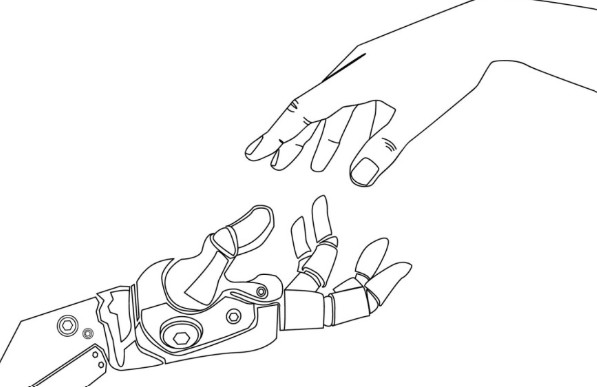
By 2025, hybrid translation models will dominate—AI systems handling first-pass drafts, humans refining accuracy, tone, and compliance.
The future of professional Chinese translation isn’t automation—it’s augmentation.
Smart exporters will use AI-assisted human translation workflows combined with:
Neural Machine Translation (NMT) fine-tuned on industry data
Human post-editing for precision
Continuous retraining using new export documentation
The goal is speed, scale, and precision—without losing the human intelligence behind every contract.
Key Takeaways for Chinese Exporters
Stop treating translation as an afterthought. It’s a profit lever.
Partner regionally. India and China are the new language alliance for global exports.
Invest in systems, not freelancers. Consistency beats cost.
Align translation with SEO and AI search. Visibility starts with structure.
Measure translation ROI. Fewer rejections, faster approvals, higher buyer confidence.
Translate to Dominate
The next era of export growth isn’t about who manufactures the best—it’s about who communicates the best.Ready to unlock new markets? Partner with a certified Chinese translation team that speaks the language of your industry—and your customers.
Professional Chinese translation partnerships aren’t a trend; they’re the foundation of future-proof global trade. Smart exporters already know this. The rest are still wondering why their perfectly built machines never leave the warehouse.
Get Your Urgent Translation Now → [Upload Your File / Get a Quote]
Request a Free Quote Today | 24/7 Availability | Serving Pan-India | Certified Translators & Localization Experts