
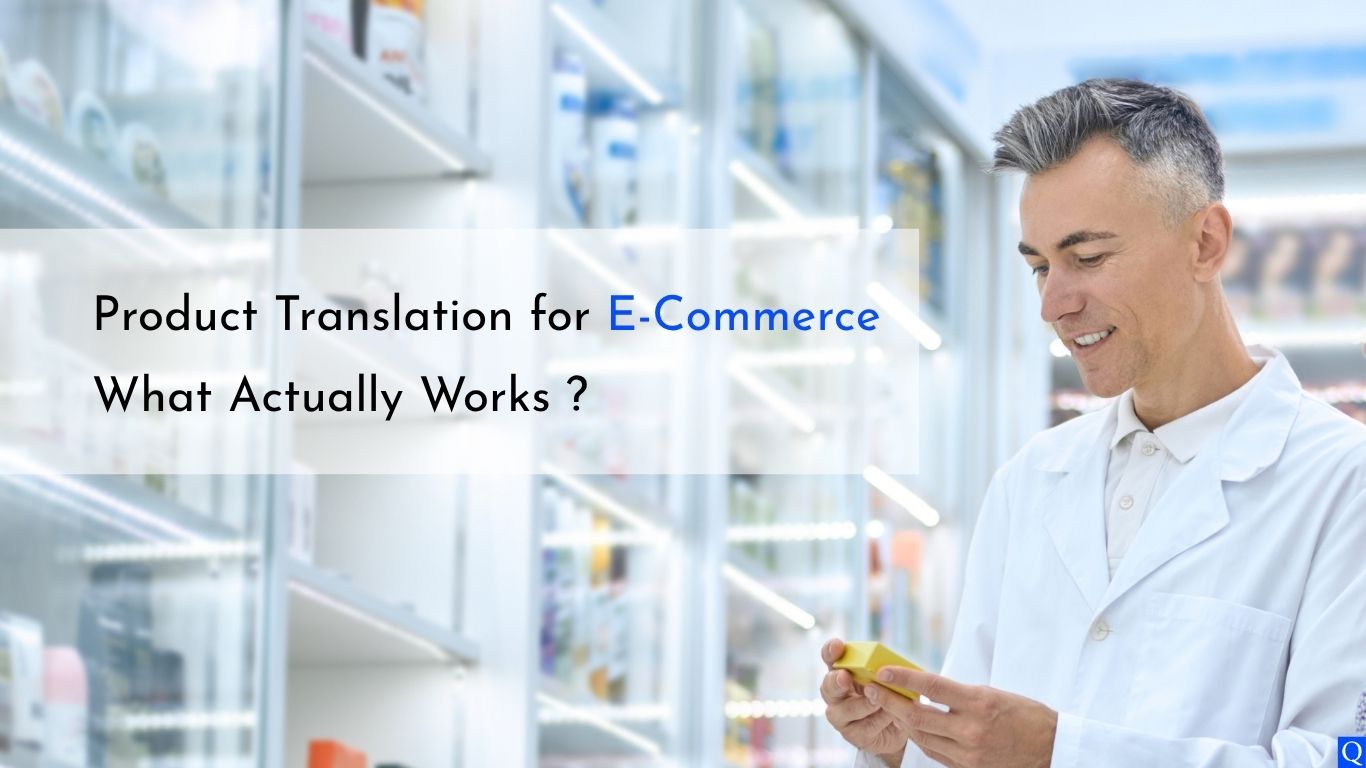
Product Translation in E-Commerce
Why Getting It Wrong Is Costing You Sales
Most e-commerce brands don’t fail internationally because of product quality. They fail because their message doesn’t translate.
A product that sells well in the US can flatline in Germany — not because Germans don’t want it, but because the description reads like a legal disclaimer. A beauty brand that thrives in the UK can generate zero conversions in Japan because the tone assumes a directness that Japanese buyers find off-putting.
This is the reality of product translation in e-commerce. And most brands are still treating it like a cost to minimize rather than a lever to pull.
Where Product Translation
Actually Breaks Down !
The failure modes are rarely what brands expect. It’s not usually a hilarious mistranslation gone viral. It’s quieter, more expensive, and harder to diagnose.
Literal translation without cultural context
– is the most common issue. A direct word-for-word conversion destroys subtext. In English, “light and airy” describes a moisturizer. Translated literally into Mandarin, the same phrase can evoke something cheap or low-quality. The product is the same. The perception tanks.
SEO keyword mismatch across languages
– is something even experienced teams miss. You’ve spent months ranking for “running shoes” in English. But in Spanish-speaking markets, shoppers search for “zapatillas para correr,” not a direct translation of your English keyword. If your translated pages are optimized for the wrong terms, you’re invisible — regardless of how good the content is.
Tone misalignment
– is subtler but equally damaging. German consumers tend to respond to precision and specifics. Brazilian shoppers often respond better to warmth and relationship-building. The same product description written for one market will underperform in the other, even if it’s technically accurate.
Incorrect units, sizing, and regulatory language
– create returns and erode trust fast. A US clothing brand listing sizes in American standards without local conversion will generate customer service tickets, refund requests, and one-star reviews — not because the product is bad, but because the listing wasn’t localized.

What Actually Happens When Product Translation Fails
Real Scenarios

Scenario 1: The conversion drop nobody can explain
A European supplement brand launches in the US. Traffic is decent. Conversions are not. The product description — translated from German — uses clinical, technical phrasing that US buyers associate with pharmaceutical disclaimers, not lifestyle products. The fix isn’t the product. It’s rewriting the copy to match the register American wellness buyers expect.
Scenario 2: The tone mismatch in Southeast Asia
A luxury skincare brand enters Thailand using the same copy as their UK site, translated word-for-word. The UK tone is minimalist, dry, almost ironic. Thai consumers prefer descriptions that convey aspiration and warmth more explicitly. Sales lag. The brand assumes the product doesn’t fit the market. The real issue: the copy doesn’t fit the culture.

Scenario 3: The sizing disaster
A fashion retailer enters Japan without adapting their size guide. US medium is not Japanese medium. Customer service tickets spike. Return rate climbs to 30%+ in the first two months. One size chart update — localized and prominently placed — cuts returns by more than half.
Translation Metrics That Matter
Where Native Fluency Meets Domain Expertise
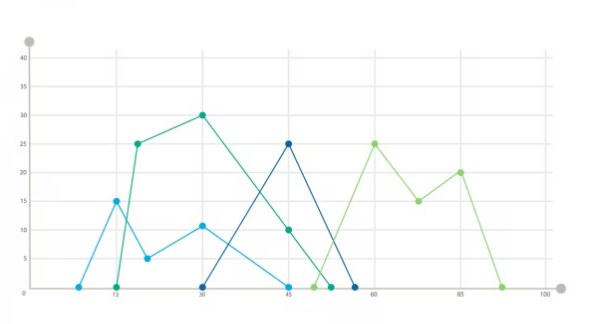
Localization has measurable impact. Businesses that invest in proper localization — not just translation — typically see:
- Conversion rate increases of 15–30% on localized product pages versus machine-translated equivalents
- Bounce rate reductions of 20–40% when copy matches the cultural expectations of the target audience
- Customer support volume drops when sizing, ingredients, and regulatory information are accurate for the target market
- Higher organic search visibility when keyword research is conducted in the target language, not back-translated from English
These aren’t theoretical. They reflect consistent patterns across e-commerce brands that treat localization as a strategic investment.
Localization Isn’t Just Product Descriptions
If you’re only translating product copy, you’re leaving most of the work undone.
Product reviews
drive purchasing decisions particularly in markets like Germany and Japan, where buyers rely heavily on peer validation. Untranslated reviews, or reviews poorly translated by machine, undermine trust at the exact moment a buyer is closest to converting. Reviews prove a strong trust for the people who are buying the products which removes the ambigious way of approaching the products.
The checkout experience
This is where localization failures become fatal. Unexpected shipping terminology, payment methods that don’t match local preferences, or legal disclaimers in the wrong register can halt a purchase that was already decided. A buyer in France who hits English-only checkout copy at the final step will often abandon — not because they don’t want the product, but because the experience breaks down.
Customer support interactions
shape repeat purchase behavior more than any product feature. If your support is in English-only, or in a machine-translated approximation, customers in new markets don’t feel valued. Customers don’t come back. Localization as well a good translation is a combination of gaining customer trust which in return increases the sale of both that specific products and also the co-products.
A Localization Strategy That Actually Works
Effective product translation isn’t a one-time project. It’s a workflow.
Step 1: Market research before translation begins
Understand what the target market already buys, what language they use to describe it, and what tone they respond to. This shapes everything downstream.
Step 2: Keyword localization — not keyword translation
Run native keyword research in the target language. Don’t assume your English keywords have direct equivalents. Work with local SEO data to find what your buyers are actually searching for.
Step 3: Cultural adaptation, not just linguistic conversion
Rewrite rather than translate. The goal is to produce copy that reads as if it was written for that market — because it should be. Humor, formality, directness, and emotional register are all market-specific.
Step 4: Technical accuracy review
Sizes, weights, ingredients, certifications, and regulatory language must be verified against local standards, not assumed to carry over.
Step 5: QA with native speakers in the target market
Native review by someone who actually buys in that market catches errors that linguists miss. Idioms that sound natural to a translator can sound jarring to a consumer.
Step 6: Ongoing optimization
Monitor conversion rates and bounce rates by market and by language. Treat underperforming markets as a localization signal, not just a traffic problem
Entity References Worth Understanding
Product translation sits at the intersection of several well-established practices: localization (adapting content for a specific locale), transcreation (recreating content to evoke the same response across cultures), and internationalization (building systems that support multiple languages from the ground up).
Global e-commerce platforms like Shopify, WooCommerce, and Magento all support multilingual storefronts, but the platform support only solves the technical layer. The content layer — what buyers actually read — still requires deliberate human input.

Human Translation vs. Machine Translation vs. Hybrid
What E-Commerce Actually Needs
Machine translation (MT)
Tools like DeepL or Google Translate — has improved dramatically. For internal documents, support tickets, or getting a rough sense of foreign-language content, it’s genuinely useful. For product pages that need to convert, it’s not enough on its own. MT handles syntax well. It handles cultural nuance poorly. It cannot detect when a phrase that’s sure of grammatically correct is commercially tone-deaf.
Human translation
delivers quality but comes with real constraints — cost, turnaround time, and inconsistency across large product catalogs. A brand with 5,000 SKUs cannot economically put every product description through a dedicated human translator for every target market.
The hybrid approach
Is what serious e-commerce operations actually use. Machine translation handles the first pass — getting the structure, the facts, the basic language right. A human editor (ideally a native speaker with e-commerce experience, not just a linguist) then reviews for tone, cultural fit, and commercial effectiveness. This is sometimes called Machine Translation Post-Editing (MTPE), and it’s become the industry standard for scaling localization without sacrificing quality on high-traffic pages.
The Practical Rule for E-Commerce Products Localization
Use full human translation for your top 20% of products — your highest-revenue SKUs, your homepage, your category pages, and your checkout flow. Use hybrid MTPE for the long tail. Never publish raw machine translation on any page you’re investing in ranking.
Industry-Specific Localization
Fashion and Beauty Get It Wrong Most Often
Fashion has the most technical localization requirements of any e-commerce vertical. Size systems vary not just by country but by garment type — US, UK, EU, and Asian sizing all differ, and within Asia, Japanese and Korean standards diverge further. A brand entering multiple markets simultaneously that publishes a single size guide is generating returns before the first order ships.
Beyond sizing, fabric descriptions carry different connotations by market. “Breathable cotton” resonates strongly with US and UK buyers. In humid Southeast Asian markets, the same claim needs to be far more specific — buyers want to know construction, weight, and weave, not a marketing adjective.
Color naming is another underestimated issue. Fashion brands frequently use evocative English color names — “blush,” “sage,” “ecru” — that either don’t translate or translate into something meaningless or odd. Localized color naming, matched to how that market’s buyers actually describe and search for colors, improves both discoverability and conversion.
Beauty and skincare face a different challenge: ingredient transparency and regulatory language vary significantly by market. An ingredient that’s marketed as a key active in the US may be regulated differently in the EU, require different disclosure language in South Korea, or carry a different cultural perception in Japan. A product description that’s legally and commercially optimized for one market can be technically non-compliant or simply unconvincing in another.
Skin tone references and beauty ideals also vary enough across markets that copy written for one region can actively alienate buyers in another. This isn’t a minor tone issue — it’s a fundamental mismatch between what the brand is promising and what the buyer is looking for.

Translation Management Systems: The Infrastructure Layer Most Brands Skip

If you’re managing localization across more than two or three markets, doing it manually — spreadsheets, email chains, individual freelancer relationships — creates consistency problems that compound over time. A product updated in English doesn’t automatically trigger an update in your French, German, or Japanese versions. Inconsistencies accumulate. Buyers in different markets get different information about the same product.
Translation Management Systems (TMS) — platforms like Phrase, Lokalise, or Smartling — solve the infrastructure problem. They maintain translation memory (so you’re not paying to re-translate phrases you’ve already localized), enforce terminology consistency across your catalog, and integrate directly with most major e-commerce platforms.
For brands serious about international growth, a TMS isn’t optional overhead — it’s the system that makes scalable, consistent localization possible. The ROI calculation is straightforward: translation memory alone typically reduces localization costs by 20–30% on large catalogs, because repeated phrases, product attributes, and boilerplate legal language are reused rather than retranslated.
Frequently Asked Questions
- Does product translation affect SEO?
- Which product page elements matter most for localization?
- Why does machine translation underperform for e-commerce?
- How do I know if my current translations are hurting conversions?
- What's the difference between product translation and localization?
- What is "conceptual equivalence" and why does it matter more than word-for-word accuracy?
Significantly. Search engines index content in every language. If your translated pages aren’t optimized for the keywords buyers in that market actually use, they won’t rank — regardless of how well your English pages perform. Localized keyword research is a separate process from translation.
In rough order of impact: product titles and meta descriptions (for discoverability), product descriptions (for conversion), reviews (for trust), sizing and specification tables (for accuracy), and checkout copy (for completion).
Machine translation handles structure and vocabulary reasonably well, but consistently fails on tone, cultural nuance, and idiomatic language. For product pages, where buyer trust is built on subtle signals, machine-translated copy often reads as generic or off — reducing conversions even when the information is technically accurate.
Compare conversion rates, bounce rates, and time-on-page between your English pages and your translated equivalents. Large gaps — particularly high bounce rates on translated pages — often indicate a localization problem rather than a traffic or product issue.
Translation converts text from one language to another. Localization adapts the entire experience — including tone, cultural references, units of measurement, and legal language — to fit a specific market. Translation is a subset of localization.
Conceptual equivalence means the translated document conveys the same meaning, intent, and effect as the original — not just the same words. In medical and legal translation, word-for-word accuracy can actually produce conceptual errors. A clause that is grammatically perfect but legally inoperable in the target jurisdiction has failed at conceptual equivalence, regardless of linguistic accuracy.
Get your Product Labels translated today !
E-commerce translation isn’t about choosing sides between human and machine. It’s about using each where it performs best.
Human translation brings nuance, persuasion, and cultural alignment — the elements that drive conversions. Machine translation brings speed and scale. The brands that succeed internationally aren’t the ones picking one over the other. They’re the ones building workflows that combine both intelligently.
Because at scale, translation isn’t just a language task.
It’s an operational system.
And the quality of that system determines whether your products simply exist in new markets — or actually sell in them.
Looking for certified document translation that follows ISO 17100 standards? Explore our legal translation services and medical translation process built on this exact framework. Check our LinkedIn for updates