
Translation Services for the Media and Entertainment Industry: How Does It Work?
Unlock Multilingual Communication with Accurate Translation Services
Media & Entertainment Translation Services
The global entertainment market doesn’t speak one language—and it doesn’t need to. Movies, TV shows, music videos, podcasts, video games, and streaming content cross borders daily. What makes that possible isn’t just creativity—it’s translation and localization. The media and entertainment industry thrives on emotional connection, and that connection depends on making stories resonate across cultures.
Translation services for media and entertainment go far beyond word-for-word conversion. They adapt humor, rhythm, emotion, and cultural nuance so audiences from Seoul to São Paulo can laugh, cry, and connect with the same story. Whether it’s a Netflix original, an indie game, or a viral documentary, accurate and artful multilingual content is the secret ingredient that turns local productions into global sensations.
This article breaks down exactly how media translation services work, the technologies involved, and why linguistic expertise matters as much as cinematography in today’s entertainment ecosystem.

Why Translation Matters in the Media Industry ?
Entertainment is global commerce disguised as culture. Hollywood blockbusters earn most of their revenue outside the United States. Korean dramas, Spanish thrillers, and Japanese anime dominate streaming charts. Even YouTube influencers now caption their content in multiple languages to reach new audiences.
Without professional media localization, this cross-border success wouldn’t exist. The goal isn’t just comprehension—it’s connection. Audiences must feel like the story was created for them, not merely translated for them.
Key benefits of translation in entertainment:
Cultural accessibility: Ensures humor, idioms, and references make sense in the target culture.
Brand consistency: Maintains tone, character voices, and style across languages.
Market expansion: Reaches non-English-speaking audiences through localized releases.
SEO and discoverability: Optimizes subtitles, descriptions, and metadata for multilingual SEO on streaming platforms.
When media companies invest in translation services for entertainment, they’re not just adding languages—they’re multiplying viewership.
The Core Types of Translation Services in Media & Entertainment
Different content formats demand different localization techniques. Below are the most common methods used across the industry:
A. Subtitling
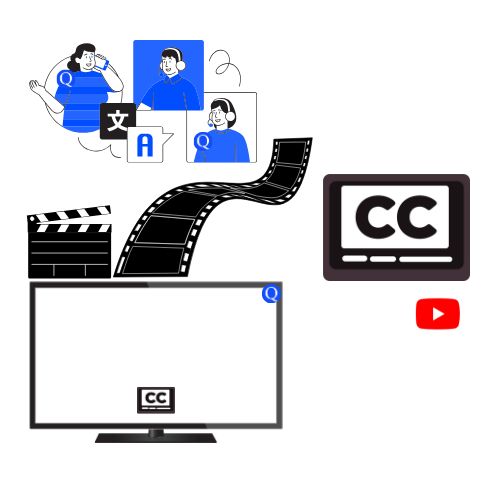
Subtitling involves translating spoken dialogue into on-screen text. It’s one of the most cost-effective and widely used methods of media localization. Good subtitles balance accuracy and timing—they match on-screen speech without losing rhythm or tone.
SEO bonus: properly tagged multilingual subtitles can improve search rankings on YouTube and streaming platforms, boosting global audience engagement.
B. Dubbing
Dubbing replaces the original voice track with a new one in another language. It requires voice actors, translators, and sound engineers to work in sync so lip movements, timing, and performance feel natural. High-quality dubbing enhances immersion and helps viewers emotionally connect with characters.
C. Voiceover Translation
Unlike dubbing, voiceover doesn’t replace the original dialogue—it overlays a translated narration. It’s common in documentaries, corporate videos, and interviews. This technique maintains authenticity while ensuring accessibility for multilingual audiences.
D. Script and Screenplay Localization
Scripts are localized early in production to adapt jokes, slang, and cultural references before filming. Writers collaborate with localization experts to craft dialogue that feels native to target audiences.
E. Transcreation
The artistic cousin of translation, transcreation focuses on recreating the message’s emotional impact. In film trailers, taglines, or promotional campaigns, the goal is not literal translation but persuasive adaptation.
Each of these methods serves a specific storytelling purpose. Together, they make up the creative backbone of translation services for the media industry.

The Workflow: How Translation Services Actually Work
Let’s lift the curtain on the process. Here’s what happens behind the scenes when a movie, show, or campaign goes multilingual.
Step 1: Content Analysis
The project starts with a linguistic and cultural audit. Experts analyze the source material—scripts, voice tracks, visual references—and identify what needs to be localized.
Step 2: Translation & Localization
Professional linguists translate the dialogue, metadata, and on-screen text. Localization specialists ensure the adapted version fits the target culture, considering idioms, tone, and social context.
Step 3: Technical Adaptation
For subtitling and dubbing, timecodes, sound engineering, and layout adjustments are handled through localization technology and desktop publishing (DTP) tools to maintain consistency across languages.
Step 4: Quality Assurance (QA)
Linguistic QA teams review every translated line to ensure timing, emotion, and cultural relevance. AI tools now assist by flagging inconsistencies or mistranslations in real-time.
Step 5: Delivery & Optimization
The final content—be it a subtitled film, dubbed series, or localized game—is delivered in all required formats. For digital platforms, international SEO strategies are applied to boost discoverability across markets.
The Role of AI and Technology in Modern Media Translation
Artificial Intelligence has transformed translation and localization in the entertainment sector. Gone are the days of manual subtitling and rigid workflows. Today’s AI in translation and localization combines speed, precision, and creativity.
Key innovations include:
Neural Machine Translation (NMT): Produces fluent, context-aware translations.
Speech Recognition & Synthesis: Automates dubbing and voiceovers with humanlike intonation.
Cloud-based Localization Platforms: Enable collaboration among translators, editors, and sound engineers worldwide.
AI-driven Quality Checks: Detect terminology inconsistencies and timing errors before final release.
These technologies empower studios to scale multilingual projects while maintaining artistic integrity. They also cut turnaround times, letting streaming giants release content simultaneously across continents.
However, human translators remain essential. They provide the cultural sensitivity and emotional depth that machines can’t replicate—especially when humor, sarcasm, or cultural nuance is involved.


Challenges in Translating Media and Entertainment Content
Even with cutting-edge tech, translating media content is a complex dance between art and science. Common challenges include:
Cultural Context: Some humor, idioms, or gestures don’t translate easily.
Timing Constraints: Subtitles and dubbing must sync perfectly with on-screen action.
Tone and Emotion: Translators must preserve the original performance’s intent.
Legal and Copyright Issues: Scripts and lyrics often require licensing adaptations.
Consistent Branding: For global franchises, character voices and messaging must remain uniform across all languages.
Top translation companies for the entertainment industry tackle these challenges with collaborative workflows, native-speaking linguists, and creative transcreation specialists.
Real-World Impact: Global Entertainment Powered by Localization
Localization isn’t just a technical service—it’s what fuels the global entertainment economy. Without it, international hits like Squid Game, Money Heist, or Narcos wouldn’t have broken language barriers.
Streaming Platforms: Services like Netflix, Disney+, and Amazon Prime Video rely on multilingual content localization to expand market share.
Gaming Industry: Global video games now launch with simultaneous multilingual releases using AI-driven translation workflows.
Music and Podcasts: Lyrics translation and localized audio ensure artists connect emotionally with diverse audiences.
The rise of multilingual internet consumption has made localized entertainment not an option but a necessity. Audiences expect choice; businesses that fail to adapt lose visibility and engagement.


How Media Companies Choose Translation Partners
Selecting the right localization partner can make or break global success. Key criteria include:
Industry Experience: Proven expertise in media translation and localization workflows.
Technology Stack: Use of AI translation, automated subtitling, and secure cloud collaboration tools.
Cultural Competence: Native translators who understand idiomatic, regional, and pop-culture nuances.
Scalability: Ability to manage multiple languages and content formats simultaneously.
Quality Assurance: Rigorous testing and consistency checks across media assets.
For global studios and streaming networks, these partnerships are long-term investments that directly influence viewer satisfaction and market growth.
The Future of Translation in the Entertainment Industry
As Web 4.0 evolves, expect translation and localization to become fully integrated into production pipelines. AI will handle linguistic mechanics, while human specialists focus on creative nuance.
Future trends shaping the industry include:
Voice cloning for multilingual dubbing without losing actor identity.
Real-time translation in live broadcasts and esports streaming.
Adaptive localization, where content auto-adjusts for regional preferences.
SEO-driven localization, ensuring that multilingual media ranks well across global search engines.
This synergy of localization technology, human creativity, and machine intelligence marks a new era—one where language is no longer a barrier to storytelling but a bridge to global engagement.

Conclusion:
The translation services for the media and entertainment industry are what make the world’s stories borderless. Through AI-driven localization, multilingual SEO, and creative transcreation, global audiences can now experience art as it was meant to be felt—no matter what language they speak.
As media expands into every market, the need for accurate, culturally sensitive translation will only grow. For studios, networks, and streaming platforms, investing in professional translation and localization services isn’t optional—it’s the foundation of global success. Because the next blockbuster, hit series, or viral song doesn’t belong to one language. It belongs to everyone.
Get Your Urgent Translation Now → [Upload Your File / Get a Quote]
Request a Free Quote Today | 24/7 Availability | Serving Pan-India | Certified Translators & Localization Experts