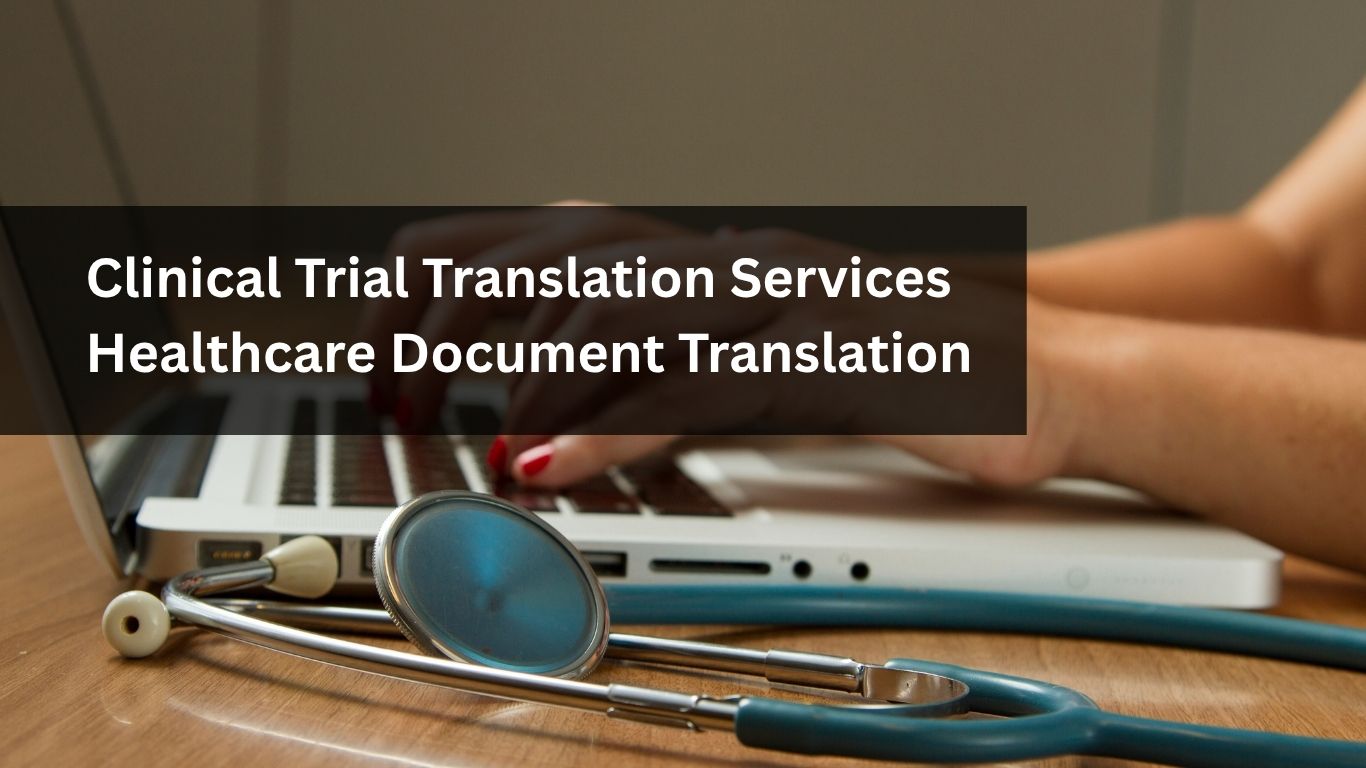
Clinical Trial Translation Services — Certified for CROs, Sponsors & Sites
Quick answer: Clinical trial translation is the certified translation of documents generated across a trial’s lifecycle — protocols, informed consent forms (ICFs), case report forms (CRFs), clinical study reports, and regulatory submissions — into the languages of every participating country. It requires linguists with clinical-research expertise, alignment to ICH-GCP, and often back-translation for patient-facing documents. Quadrate delivers ISO 17100-certified clinical trial translation across 100+ languages under strict confidentiality.
A clinical trial is only as reliable as the documents behind it. When a study runs across multiple countries, every protocol amendment, consent form, and safety report must say precisely the same thing in every language — because a mistranslated dosage in a protocol, an unclear phrase in an informed consent form, or an inconsistent term across a regulatory submission is not a language error. It is a patient-safety risk, an ethics-committee rejection, or a regulatory delay that can set a trial back months and cost far more than the translation ever did.
This is why clinical trial translation is a specialist discipline in its own right — distinct from general medical translation. It demands linguists who understand clinical research methodology, the regulatory frameworks of each market, and the terminology that has to remain identical from protocol to patient. Quadrate provides that specialist capability for the CROs, sponsors, and investigator sites running trials into and out of global markets.


Why does clinical trial translation
need specialist linguists?
Clinical trial translation needs specialists because trial documents demand three things simultaneously that general translators cannot safely combine: regulated clinical terminology, patient-facing clarity, and strict regulatory compliance. An informed consent form must be medically precise and readable by a participant at a lay comprehension level. A protocol must preserve exact clinical meaning across every amendment and version. A regulatory submission must satisfy the specific requirements of the destination authority. General or machine translation routinely fails on exactly this terminology — and in clinical research, that failure carries consequences for patient safety and trial validity, not just readability.
The work therefore requires linguists trained in clinical research and ICH-GCP, supported by independent review, terminology control, and — for patient-facing instruments — back-translation and reconciliation to verify equivalence.
The regulatory frameworks clinical trial translation must satisfy
Clinical trial documentation is governed by international and national standards, and translations must respect all of them. The foundational framework is ICH-GCP (International Council for Harmonisation — Good Clinical Practice), which underpins how trials are conducted and documented worldwide. Beyond it, submissions are made to national and regional regulators, each with its own language and format requirements:
- FDA (United States)
- EMA and national competent authorities across the European Union
- CDSCO (India)
- PMDA (Japan)
- MHRA (United Kingdom)
- NMPA (China)
Alongside regulators, each participating site’s ethics committee / Institutional Review Board (IRB) reviews patient-facing documents — particularly informed consent forms — in the local language. A translation that satisfies a regulator but reads poorly for an ethics committee can still stall a trial, which is why patient comprehension matters as much as technical accuracy.


Clinical trial documents we translate
Clinical trial translation spans the full documentation set a study generates. The core document types include:
Protocols and amendments. Study protocols, synopses, and every subsequent amendment — translated so clinical meaning is preserved exactly across versions, with terminology locked through translation memory so version three still matches version one.
Informed Consent Forms (ICFs). Among the highest-stakes documents in any trial. ICFs must be medically accurate yet readable by participants with no medical background, and they are closely scrutinised by ethics committees. We translate them for both accuracy and lay comprehension, applying back-translation and reconciliation where the protocol or sponsor requires it.
Case Report Forms (CRFs) and patient-facing instruments. CRFs, patient diaries, questionnaires, and patient-reported outcome (PRO) instruments — where consistency and linguistic validation matter for data integrity across sites and languages.
Clinical Study Reports (CSRs) and safety documentation. CSRs, investigator brochures, serious adverse event (SAE) reports, pharmacovigilance and DSUR documentation — dense, regulated material requiring specialist accuracy and strict version control.
Regulatory and ethics submissions. Complete submission packages for regulatory authorities and ethics committees in each participating country, meeting local format, certification, and language requirements.
What is back-translation
and when is it required?
Back-translation is the process of translating a completed translation back into the source language, by an independent linguist who has not seen the original, to verify that meaning has been preserved. Any discrepancies are then reconciled. In clinical trials, back-translation is commonly required for informed consent forms and patient-reported outcome instruments, because these documents directly affect patient understanding and data validity — and because ethics committees and sponsors often mandate it. Quadrate provides full forward-translation, back-translation, and reconciliation workflows for the documents that need them.
How clinical trial translation works at Quadrate ?
Our process is built around the accuracy and traceability clinical research demands:
- Scoping. We review the document set, target languages, participating countries, and regulatory and ethics requirements, and confirm which documents need certification, linguistic validation, or back-translation.
- Specialist assignment. Each document is assigned to a native linguist with clinical-research expertise in the relevant therapeutic area.
- Translation with terminology control. Translation is performed against approved glossaries and translation memory, keeping terminology consistent across protocols, amendments, and every related document.
- Independent review. A second qualified linguist reviews the translation. For ICFs and PRO instruments, back-translation and reconciliation are applied where required.
- Certification and delivery. Certified output is provided where regulators or ethics committees require it, delivered in your working format and ready for submission.
Every stage runs under ISO 17100-certified processes, with NDAs, encrypted transfer, and secure handling of patient and trial data throughout.
Which languages do clinical trials need?
Trials translate into the languages of every participating site. Common requirements include:
- Europe: German, French, Italian, Spanish, Dutch, Polish
- East Asia: Japanese, Korean, Mandarin (Simplified & Traditional)
- Latin America: Latin American Spanish variants and Brazilian Portuguese
- India & South Asia: Hindi, Tamil, Telugu, Bengali, and other regional languages for local sites and ethics submissions
- Middle East: Arabic
Quadrate delivers across 100+ languages, matching each document to native linguists with clinical-research expertise rather than applying one team to every therapeutic area.
Certified, compliant, and confidential
Clinical trial documents are both regulated and highly sensitive, and typically require certified translation to be accepted by regulatory authorities and ethics committees. Quadrate provides certified, ISO 17100-compliant clinical trial translation with:
- Linguists trained in clinical research and ICH-GCP terminology
- Independent second-linguist review, with back-translation and reconciliation for patient-facing instruments where required
- Terminology and translation-memory management for consistency across protocols and amendments
- Strict confidentiality — NDAs, encrypted transfer, secure storage, and restricted linguist access to protect patient and trial data
- Human quality assurance on every document, never unchecked machine output
Trusted clinical trial translation for global research
Whether you are a CRO managing multi-country studies, a sponsor preparing regulatory submissions across the FDA, EMA, CDSCO, or PMDA, or an investigator site handling patient consent, Quadrate delivers clinical trial translation built for accuracy, compliance, and patient safety — in 100+ languages, by native linguists with clinical-research expertise.
FAQ – Clinical trial translation
What is clinical trial translation?
Clinical trial translation is the certified translation of trial documents — protocols, informed consent forms, case report forms, clinical study reports, and regulatory submissions — into the languages of participating countries, by linguists with clinical-research expertise, ensuring accuracy, patient comprehension, and regulatory compliance.
Do informed consent forms need certified translation?
Yes. Informed consent forms must be certified and are closely reviewed by ethics committees. They require both medical accuracy and lay-level readability, and often back-translation and reconciliation to verify equivalence in the participant’s language.
What is back-translation in clinical trials?
Back-translation is translating a completed translation back into the source language by an independent linguist to verify accuracy, followed by reconciliation of any discrepancies. It is commonly required for informed consent forms and patient-reported outcome instruments.
Which regulatory standards apply to clinical trial translation?
Clinical trial documentation follows ICH-GCP, with submissions made to authorities such as the FDA (US), EMA (EU), CDSCO (India), PMDA (Japan), and MHRA (UK), plus local ethics committee review of patient-facing documents.
Which clinical trial documents do you translate?
Protocols and amendments, informed consent forms, case report forms, clinical study reports, investigator brochures, SAE and pharmacovigilance reports, patient diaries, PRO instruments, and regulatory and ethics submissions.
Which languages do you translate clinical trial documents into?
Over 100, including German, French, Spanish, Italian, and Polish for Europe; Japanese, Korean, and Mandarin for Asia; Brazilian Portuguese for Latin America; Arabic for the Middle East; and Hindi, Tamil, and other Indian languages for South Asian sites.
Is clinical trial translation kept confidential?
Yes. Quadrate handles all trial documents under NDA with encrypted transfer, secure storage, and restricted linguist access, protecting patient and trial data throughout the project.

Translate Documents with Confidence
In a world where clinical research spans borders, accurate clinical trial translation is essential for regulatory success, patient safety, and research continuity. Don’t compromise on precision when lives and approvals are on the line.
Partner with Quadrate for expert, fast, and compliant clinical trial document translation services—trusted by global healthcare leaders.
Don’t just translate. Communicate. Localize. Expand.