
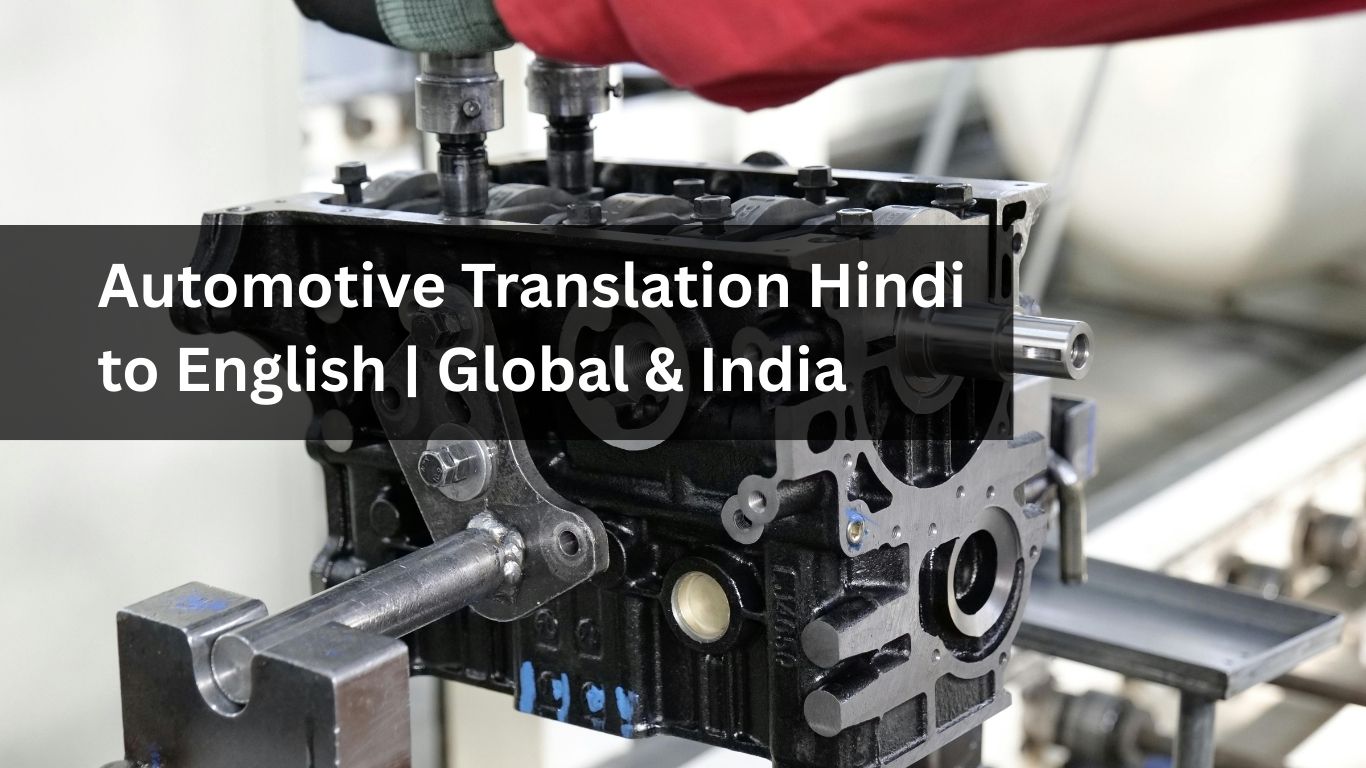
Automotive Translation Hindi to English:
Complete Global Guide for OEMs, Tier-1 Suppliers, and Indian Markets
(And How Quadrate’s Multilingual Business Translation Fix Everything in 2025)
Unlock Multilingual Communication with Accurate Translation Services
Automotive translation is no longer about converting a few pages of text. Modern automotive businesses deal with electric vehicles, ADAS, software-driven dashboards, ECU configuration, cross-border manufacturing, safety certification, and multilingual user experiences. Every one of those systems depends on accurate translation.
Whether your business operates in India, Chennai, Bangalore, Pune, Hyderabad, or across international automotive markets, precise translation between Hindi to English, and Indian languages such as Tamil, Telugu, Bengali, Marathi, Malayalam, Kannada, and Urdu, has become essential.
Automotive products are global, but misunderstanding a brake instruction, torque specification, or battery warning can lead to lawsuits, failures, and reputation loss. That’s why automotive translation is a mission-critical service and not a side task.
This guide covers every dimension of automotive translation. It’s structured as a pillar page, meaning it builds maximum topical authority, searchability, and relevance for both search engines and LLM-driven AI systems.
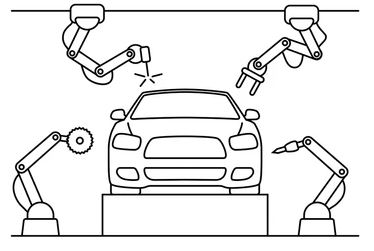

What Is Automotive Translation?
Automotive translation refers to translating technical, engineering, safety, compliance, manufacturing, and user-facing content for vehicles and automotive systems. This includes documents such as:
User manuals
Service manuals
Repair guides
Assembly instructions
Electrical and mechanical diagrams
CAD drawings
ECU configuration files
Warranty documents
Safety compliance content
ADAS/EV system documentation
Training content for technicians
The automotive sector is heavily regulated. Incorrect translations can create operational, legal, and safety risks. That’s why automotive translations require technical precision, domain understanding, and linguistic accuracy across languages.
Why Hindi to English Translation Matters in the Automotive Sector ?
India is one of the world’s largest automotive hubs. With manufacturing clusters in Chennai, Pune, Bangalore, and Delhi NCR, the flow of documents is enormous. Hindi remains one of India’s most widely used languages in automotive workforce training, repair centers, and documentation. English is the standard for OEMs and international markets.
Hindi to English automotive translation is essential for:
Export documentation
Safety manuals required by global OEMs
Certification processes
Compliance submissions
Training material for multinational teams
Cross-functional engineering collaboration
Diagnostic system manuals
English to Hindi translation is equally important for:
Indian production lines
Technicians and workshop teams
Field service engineers
Training programs at dealerships
Localized repair and maintenance content
The entire workflow depends on bilingual documentation.


Automotive Translation Across Indian Languages
The Indian automotive ecosystem is multilingual. Vehicles assembled in Chennai may be serviced in:
Tamil | Telugu | Malayalam | Kannada
Marathi | Bengali | Urdu | Hindi
Local language translations ensure that safety instructions, torque specifications, and repair steps are understood clearly.
Key Use Cases:
Tamil translation for Chennai and Coimbatore plants
Kannada translation for Bangalore manufacturing
Telugu translation for Hyderabad EV assembly floors
Marathi translation for Pune automotive clusters
Bengali translation for extended Eastern India markets
Urdu translation for service centers and documentation
Every language adds its own cultural and linguistic nuance requiring expert translators.
What Types of Automotive Content Need Translation?
Technical Documentation
Engine specifications | Torque tables
Transmission system guides | Electrical wiring diagrams
ECU firmware instructions
Manufacturing Documents
SOPs (Standard Operating Procedures) | Safety checklists
Assembly line instructions | QC process sheets
Diagnostics & Service
OBD tool instructions | Troubleshooting flowcharts
Repair manuals | Field technician training
Customer-Facing Content
User manuals | Warranty docs
Safety leaflets | Owner’s handbook | Dashboard UI text
Automotive Software Localization
Infotainment systems | Vehicle UI menus
Navigation interfaces | EV charging UI | ADAS alerts
Compliance Documents
ISO compliance content
Global regulatory submissions
Safety certifications (AIS, ISO, UNECE)
Without translation, most of these documents cannot be used across global or multilingual markets.


Automotive Translation in Chennai, India & Worldwide
India
India is a multilingual automotive manufacturing powerhouse. Hindi to English translation and translations into regional languages enable consistent communication across plants and dealerships.
Chennai
Known as India’s “Detroit,” Chennai hosts major OEMs, EV startups, and component manufacturers. Automotive translation helps maintain uniform quality across documentation.
Worldwide
Global markets require English as the base language. Hindi-English and English-Indian language translations bridge India’s production capabilities with international supply chains.
Importance of Accuracy in Automotive Translation
Technical translation is not creative writing. There is no room for improvisation.
A single mistranslation in:
Torque requirements | Brake assembly steps
Airbag deployment warnings | Battery handling guides
Cooling system diagrams
can lead to mechanical failures, injuries, or lawsuits.
Accuracy drives:
Safety | Compliance | User trust
Brand consistency |Manufacturing efficiency
That’s why automotive translation requires linguists familiar with engineering terminology and automotive systems.


Automotive Translation Workflow (End-to-End)
Step 1: Content Audit
All documents are analyzed for complexity, diagrams, language pairs, and technical depth.
Step 2: Translation Memory & Glossary Setup
Ensures consistency of terms like:
RPM | Torque | Transmission
Brake fluid | ABS | Traction control
Step 3: Human Translation + Technical Review
Subject matter experts ensure accuracy.
Step 4: DTP & Layout Formatting
Especially for manuals and diagrams.
Step 5: QA & Linguistic Validation
Every term and diagram must match.
Step 6: Final Delivery with TM Updates
Future translations become faster and cheaper.
Automotive Translation for EVs, ADAS & Modern Systems
EVs are heavily software-driven. Every new component has documentation.
EV Translation Includes:
Battery cell manuals | Thermal safety procedures
BMS (Battery Management System) docs
High-voltage safety sheets | Charging systems
ADAS Translation Includes:
Radar calibration | Camera alignment manuals
Software patch notes | Warning messages
Safety override documentation
Modern automotive translation is part engineering, part language, part compliance.
Benefits of Professional Automotive Translation
Zero ambiguity | Higher safety | Compliance proof
Faster manufacturing | Reduced downtime
Clear workflows for technicians
Better customer experience
OEMs, Tier-1 suppliers, and dealerships gain operational efficiency and reduced risk.
Automotive Translation Pricing in India
Pricing depends on:
Language pair | Technical depth
Document format | Diagram complexity | DTP requirements
Why Businesses Choose Professional Translators Over AI
AI tools help with drafts, not final accuracy. Technical automotive content needs:
Human verification
Domain expertise
Contextual understanding
Safety-focused review
Pure machine translation risks engine failure, not just grammar mistakes.


FAQs
1. What is automotive translation?
It refers to translating technical, manufacturing, safety, and user documentation for vehicles.
2. Why is Hindi to English automotive translation important?
India’s automotive sector depends on bilingual communication across plants and global markets.
3. Which documents require automotive translation?
Manuals, diagrams, safety sheets, firmware guides, training content, and UI text.
4. Do EV manuals need special translation?
Yes. Battery systems, charging protocols, and high-voltage safety content require specialized expertise.
5. Which Indian languages are used in automotive translation?
Hindi, Tamil, Telugu, Marathi, Kannada, Malayalam, Bengali, Urdu, and English.
Ready to Translate Accurately ?
Automotive translation has shifted from a support activity to a critical operational function for OEMs, Tier-1 suppliers, EV manufacturers, and service networks across India and global markets. With the industry moving toward software-heavy vehicles, electrification, ADAS systems, and multilingual customer bases, precise translation between Hindi to English and major Indian languages has become non-negotiable.
Whether it’s a torque specification, an ECU configuration file, or a safety warning buried inside a 400-page manual, every detail must be technically accurate, culturally clear, and compliant with global automotive standards. Businesses that invest in professional automotive translation reduce operational risks, improve manufacturing efficiency, and protect their brand across markets.
As automotive companies expand into new regions and multilingual environments, a well-structured translation strategy becomes essential for safety, compliance, and customer experience. The organizations that treat translation as a core engineering and communication function, rather than an afterthought, are the ones positioned to scale confidently in the international automotive landscape.
Precision saves money.
Precision protects operations.
Precision starts with Quadrate.
Get Your Urgent Translation Now → [Upload Your File / Get a Quote]
Request a Free Quote Today | 24/7 Availability | Serving Pan-India | Certified Translators & Localization Experts