
Agile Translation: What It Is and How to Implement It (2026 Guide)
Quick answer: Agile translation applies agile software-development principles to localization — short iteration cycles, continuous feedback, cross-team collaboration, and rapid response to change. Instead of translating everything in one batch at the end of a project, agile translation runs continuously alongside development, keeping every language version current and cutting time-to-market. It’s best suited to software, apps, websites, and any content that updates frequently.
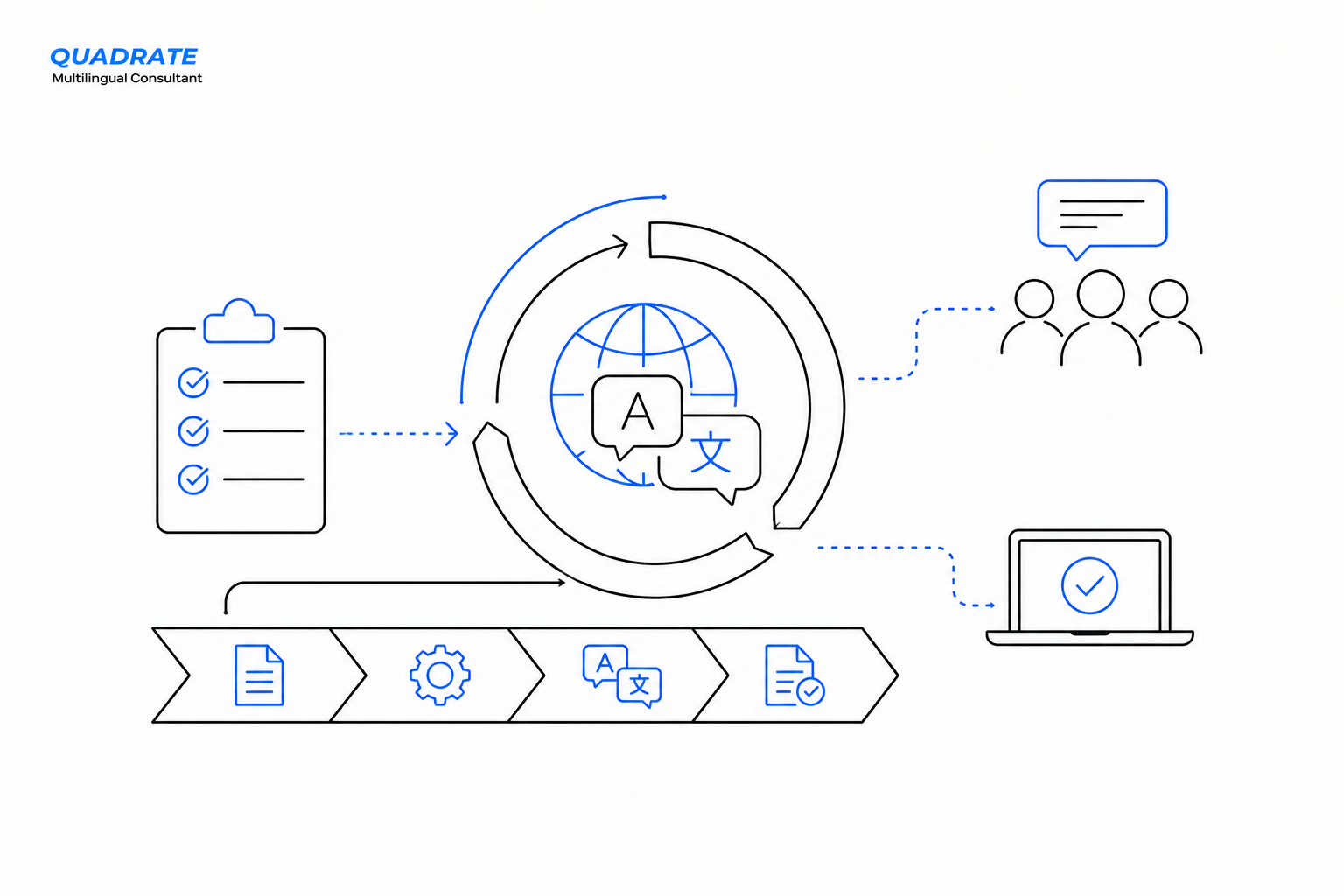
Traditional translation follows a simple but slow pattern: finish the product, then send everything for translation in one large batch. By the time it comes back, the product has changed and the market has moved. Agile translation fixes this by borrowing from agile software development — turning translation from an end-of-line bottleneck into a continuous, responsive process that keeps pace with the business.
This guide covers what agile translation is, how it differs from traditional workflows, and the exact steps to implement it. Do follow us on LinkedIn for agile translation extended understanding
What is agile translation ?
Agile translation is a localization approach that applies agile methodology — short iterations, continuous delivery, constant feedback, and close collaboration — to translation work. Rather than a single sequential phase at the end of a project, translation is broken into small, continuous increments that happen in parallel with development and content creation. The outcome is faster turnaround, content that stays current across every market, and the flexibility to absorb change without derailing the project.
Agile translation vs traditional (waterfall) translation
| Queries | Traditional (Waterfall) | Agile Translation |
| When translation happens | At the end, one large batch | Continuously, alongside development |
| Response to change | Slow — changes mean redoing work | Fast — iterations absorb change |
| Feedback | After delivery | Constant, throughout |
| Time-to-market | Longer | Shorter |
| Best for | Static, one-off content | Products, apps, evolving content |
Traditional workflows still suit fixed, one-time documents. But for anything that changes — software, apps, websites, ongoing content — agile translation keeps every language version in sync without the end-of-project scramble.
How does agile translation work?
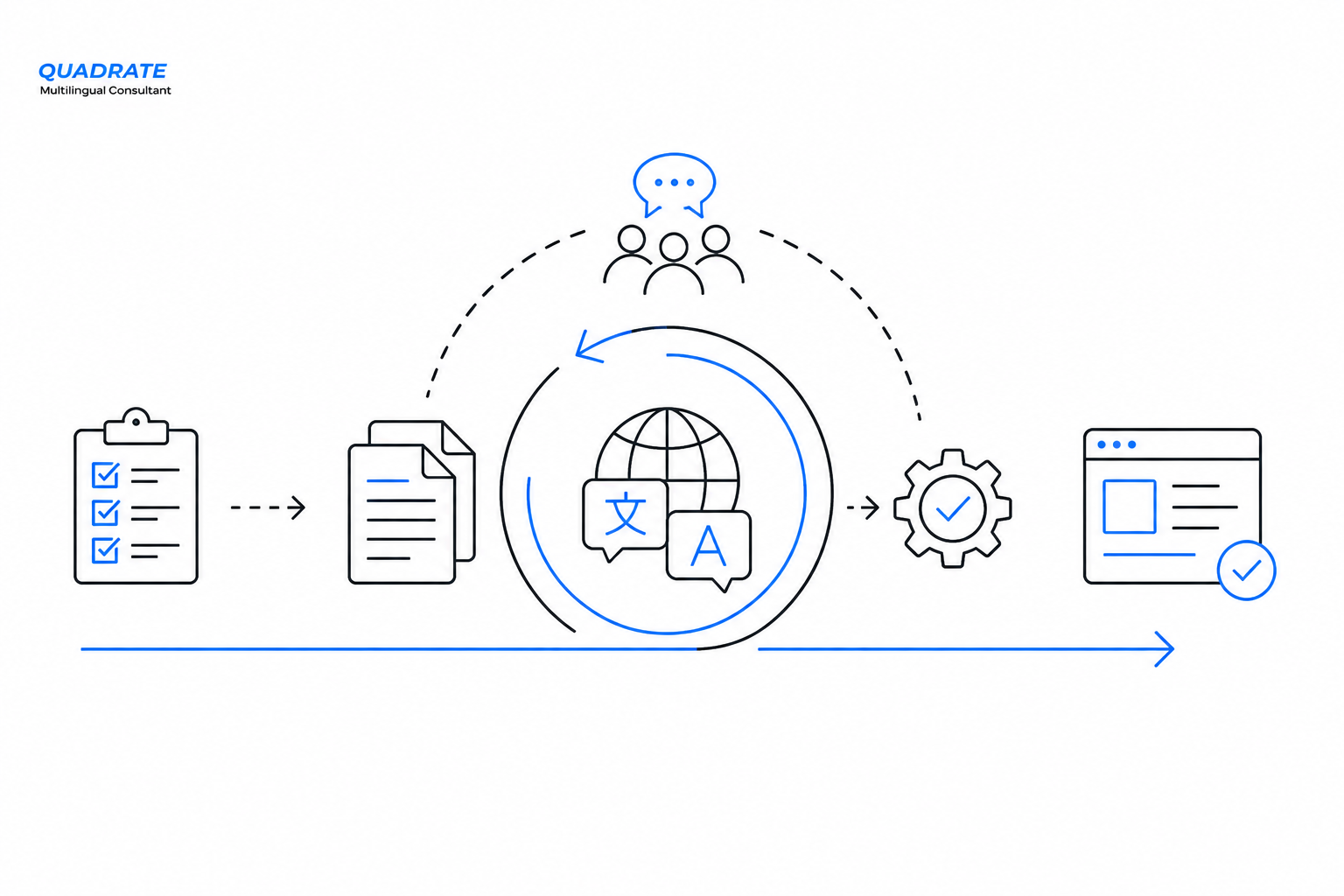
Agile translation works by integrating translation into continuous cycles rather than a final phase. New or updated content enters a shared workflow, is translated in small increments using translation memory and glossaries for consistency, is reviewed continuously, and is delivered as it’s ready. Feedback flows back into the process constantly, and each cycle is an opportunity to improve. The five practices below are how organizations build this capability.
How to implement agile translation : 5 practices
1. Use cloud-based translation tools
A cloud-based translation management system (TMS) is the foundation. It lets distributed teams — translators, reviewers, project managers — work on the same project in real time, with translation memory, terminology management, and instant updates. The right platform is what makes continuous, collaborative translation possible at all.
2. Streamline processes with automation
Manual workflows — emailing files, manual formatting, copying content between systems — introduce delay and error. Agile translation automates content ingestion, translation-memory leverage, and formatting, so linguists spend time on language, not logistics. Fewer manual touchpoints means faster cycles and fewer mistakes.
3. Build localization into development (continuous localization)
The defining shift is when translation happens. Instead of waiting until a product is finished, localization is embedded from the start — continuous localization. As features and content are built, they’re localized in parallel. This means designing for text expansion, writing localizable code, and planning for multiple languages up front. Translation stops being a final hurdle and becomes part of the build.
4. Foster a collaborative mindset
Agile translation depends on breaking silos between technical writers, developers, marketers, localization experts, and translators. Everyone needs visibility into the translation pipeline — what’s in progress, what changed, what’s blocked. Continuous collaboration surfaces problems early and solves them fast, which is what makes short cycles work.
5. Iterate and continuously improve
Agile’s essence is improving through repeated cycles. Teams regularly review the process — hunting bottlenecks, tracking metrics like turnaround, error rate, and cost per market — and make incremental improvements. Small gains compound into a localization operation that gets faster and better over time.
What are the benefits of agile translation?
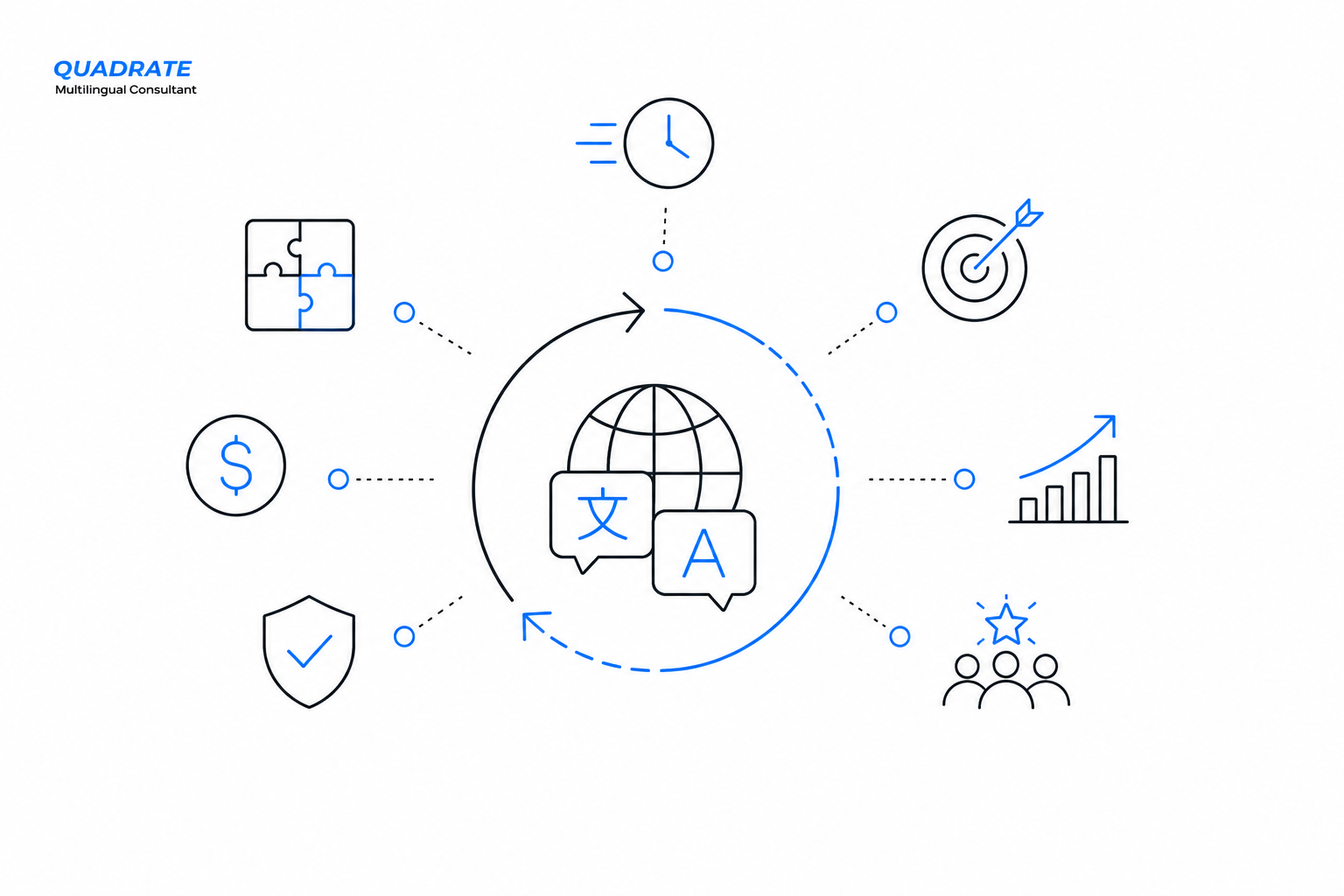
In a fast-moving global market, the companies that localize quickly hold a real competitive advantage — and agile translation is what makes that speed possible without sacrificing quality.
| Benefit | Why it matters |
| Faster time-to-market | Content ships in every language sooner |
| Content stays current | No lag between product updates and translations |
| Lower rework | Changes absorbed in small cycles, not re-done in bulk |
| Better consistency | Translation memory and glossaries applied continuously |
| Scalability | Add markets and languages without redesigning the process |
Getting started with agile translation
Shifting to agile translation is part process, part technology, part mindset. Many organizations accelerate it by partnering with a localization provider that already operates in agile, continuous workflows — with the tooling, translation memory, and collaborative processes in place.
Quadrate helps businesses implement agile, continuous localization across 100+ languages, combining native linguists with translation technology and ISO 17100-certified processes. Talk to us about your localization workflow.
FAQs – Agile Translation Workflow
- What is agile translation?
Agile translation applies agile methodology — short iterations, continuous delivery, feedback, and collaboration — to translation and localization, so translation happens continuously alongside development rather than in one batch at the end. - What is the difference between agile and waterfall translation?
Waterfall translation happens at the end of a project in one batch and responds slowly to change. Agile translation happens continuously, absorbs change through small iterations, and delivers faster time-to-market. - What is continuous localization?
Continuous localization embeds translation into the development cycle so content is localized as it’s created, keeping every market’s version current, rather than translating after a product is finished. - What tools are needed for agile translation?
A cloud-based translation management system with translation memory, terminology management, and real-time collaboration, plus automation to reduce manual file handling. - Which businesses benefit most from agile translation?
Businesses with frequently-updated content — software, apps, websites, and evolving marketing — because agile translation keeps all language versions in sync without a slow end-of-project phase. - Does agile translation reduce quality?
No. It uses the same human linguists and review steps as traditional translation, but organizes them into continuous cycles — often improving consistency through ongoing use of translation memory and glossaries.