
What Is L10n? Localization Explained
Localization Meaning, Process, Examples & How It Differs From Translation
Quick answer: L10n is shorthand for localization, the process of adapting a product, service, website, software application, app, game, or content to the language, culture, conventions, and expectations of a specific market. L10n goes beyond translating words by considering factors such as currency, dates, images, user experience, terminology, cultural references, and local requirements.
A product can be translated correctly and still feel completely foreign to its intended audience.
For example, translating an e-commerce website into Tamil, Hindi, French, or German changes the language. But if the website still displays unsuitable currency formats, unfamiliar payment options, awkward date formats, culturally inappropriate imagery, or poorly adapted product messaging, the experience has not been fully localized.
That distinction is at the heart of L10n. Quadrate currently lists localization as one of its core solutions, covering areas including website, software, mobile application, and multimedia localization. Its localization offering also describes adaptation of currency, numbering, date formats, geographical and cultural elements, graphical elements, layouts, and application functionality.
What Is L10n?
L10n is an abbreviation for localization. The term describes the process of adapting content, products, software, websites, applications, games, or digital experiences for a particular language, region, or market.
The abbreviation comes from:
L + 10 letters + n = L10n. The L is the first letter of localization, the n is the last letter, and 10 represents the ten letters between them.
But the meaning of L10n is more important than the abbreviation itself.
Localization goes beyond changing words from one language to another. It considers how the target audience actually experiences the product.
Depending on the project, localization may involve:
Language | Cultural references | Currency | Date and time formats | Units | Address formats | Images | Colours | Symbols | User-interface text | Payment methods | Legal requirements | Search behaviour | Tone and messaging
For example, an American e-commerce website entering India might need more than English-to-Hindi translation. The website may also need Indian currency, local payment methods, appropriate address fields, regional language options, locally relevant product information, and culturally appropriate content.
In simple terms: translation changes the language; localization adapts the experience.


Why Is Localization Called L10n?
The abbreviation is simply a shortened form of the word localization.
The structure is:
Localization → L + 10 letters + n → L10n. Similar terminology is used throughout the language and technology industry:
Localization → L10n | Internationalization → i18n | Globalization → g11n. These abbreviations are particularly common in software development, translation, localization, product management, and multilingual technology workflows.
What Does Localization Actually Involve?
Localization can involve language, but language is only one part of the process. The exact requirements depend on the product, target market, industry, and intended audience.
Language
The obvious starting point is adapting the source content to the target language. But localization also considers:
Terminology | Grammar | Tone | Regional expressions | Spelling conventions | Context | Audience expectations
A single language can also have different regional conventions. English for the United States, United Kingdom, Australia, and India, for example, may require different spelling, terminology, formatting, or messaging.
Cultural References
A phrase, joke, image, symbol, or example that works in one market may be confusing or inappropriate in another. Localization evaluates whether the content makes sense within the cultural context of the target audience.
Currency
A localized e-commerce or financial experience may need the appropriate currency and formatting. USD | EUR | GBP | INR | JPY | CAD | AUD. Currency localization can also involve the placement of currency symbols, decimal conventions, and number formatting.
Date and Time Formats
Date conventions vary between markets. For example: MM/DD/YYYY | DD/MM/YYYY | YYYY-MM-DD. Time formats may also differ, including the use of 12-hour and 24-hour conventions.
Units of Measurement
Depending on the market, localized products may need to account for: Metric units | Imperial units | Temperature | Distance | Weight | Dimensions. The appropriate approach depends on the target audience and product.
Address Formats
Address structures vary significantly between countries. A localized website may need different fields or ordering for: Street address | City | State/region | Postal code | Country | Administrative areas
Names and Personal Titles
Forms and customer-facing content may need to accommodate local naming conventions and titles.
Images and Graphics
Images can communicate cultural meaning even when no text is present. Localization may therefore involve reviewing: Photography | Illustrations | Icons | Screenshots | Diagrams | Infographics | Graphic text
Colours and Symbols
Colours and symbols can have different cultural associations. A localization team may therefore review visual elements to determine whether they are appropriate for the intended market.
User-Interface Text
Software and applications contain many small pieces of content that need localization. Buttons | Menus | Error messages | Notifications | Tooltips | Forms | Navigation | Settings
Legal and Regulatory Requirements
Some markets have specific requirements relating to consumer information, privacy, disclosures, product information, or other regulated content. These requirements depend on the jurisdiction and industry and should be reviewed with appropriate legal or regulatory professionals where necessary.
Local Payment Methods
E-commerce and digital products may need to accommodate payment methods familiar to customers in the target market.
Search Behaviour
Website localization can also involve adapting content to the way users search in a particular market. This can affect: Keywords | Search intent | Metadata | Headings | Local terminology | Content structure
Tone and Messaging
A direct translation may preserve the words while losing the intended tone. Localization considers whether the message feels natural and appropriate to the target audience.
Not every localization project requires all of these adaptations. A translated legal document, mobile application, software product, and e-commerce website can have very different localization requirements.
Why Is Localization Important ?
Entering a new market involves more than making content available in another language. Users expect products and services to match familiar conventions. If a website displays unfamiliar currency, incorrect date formats, unsuitable images, or awkward terminology, the experience can feel poorly adapted even when the translation itself is technically correct.
Localization helps businesses create content and products that are more natural for their target audiences.
Key benefits include:
Better user experience | Greater cultural relevance | Improved customer trust | Stronger market acceptance | Better engagement | Reduced misunderstanding | Consistent brand communication | Smoother international expansion
For businesses expanding internationally, localization can therefore become an important part of the overall market-entry strategy.

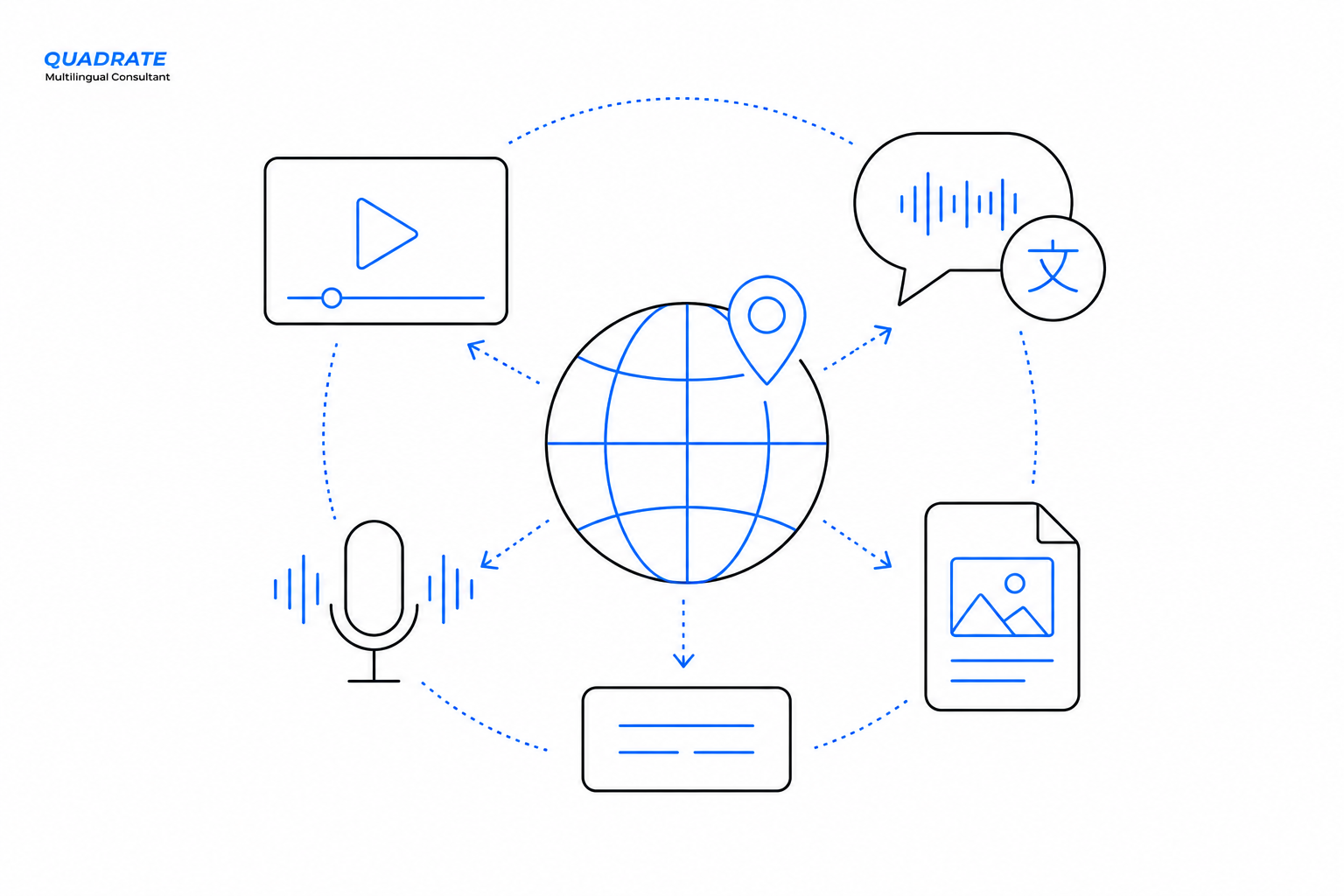
What Is the Difference Between
Translation and Localization ?
Translation primarily focuses on transferring meaning from one language to another. Localization, or L10n, goes further by adapting the overall experience for a specific market.
Translation may change:
Words | Sentences | Paragraphs | Terminology
Localization may additionally change:
Currency | Dates | Measurements | Images | Cultural references | User interface | Payment methods | Address formats | Search terminology | Brand messaging
For example, translating a product page from English to French changes the language. Localizing that page for France may also require adjustments to currency, terminology, measurements, formatting, imagery, and other market-specific elements.
In simple terms: Translation changes the language. Localization adapts the experience.
Examples of Localization
The easiest way to understand L10n is through real-world examples.
E-commerce Localization
Imagine an American e-commerce website expanding into India. Translation could change the website’s English content into Hindi. Localization could additionally adapt:
Currency to INR | Payment methods | Address fields | Date formats | Product terminology | Delivery information | Customer support | Images | Search terms. The goal is to make the shopping experience feel appropriate for Indian customers.
Software Localization
A software application may need localization when entering new markets. The process can involve:
Menus | Buttons | Error messages | Help content | Date formats | Currency | Graphics | Keyboard behaviour | Text expansion | User-interface testing. A translation can be linguistically correct while the interface still contains truncated text or broken layouts.
Mobile App Localization
Mobile applications have additional considerations because content needs to fit different screen sizes. App localization can involve:
UI text | Notifications | App-store descriptions | Screenshots | Graphics | Tutorials | Language-specific text expansion | Testing
Game Localization
Games often require deeper cultural adaptation because entertainment depends heavily on context. Game localization can include:
Dialogue | Character names | Menus | Subtitles | Audio | Graphics | Humour | Cultural references | User experience. A literal translation may preserve the words while losing the intended humour or personality.
Marketing Localization
Marketing content often needs creative adaptation rather than literal translation. A slogan may depend on:
Wordplay | Emotion | Humour | Cultural references | Brand voice | Local expectations. In some cases, the best localized version may use completely different wording while preserving the original marketing message.


What Types of Content Can Be Localized?
Localization applies to many types of content and products.
Websites | Software | Mobile applications | Games | E-learning | Marketing campaigns | Multimedia | Product documentation | Technical content | E-commerce platforms | Digital products
Website Localization
Website localization adapts a website for a specific market or language. It can involve:
Website content | Navigation | User experience | SEO | Metadata | Currency | Forms | Images | Local terminology | Regional content. Quadrate’s existing localization service describes website localization as adapting website content and related data to local languages and regional requirements, including currency, numbering, date formats, geographical differences, and cultural variations.
Software Localization
Software localization adapts applications for users in specific markets. It may involve:
User interfaces | Menus | Error messages | Help content | Graphics | Layout | Formatting | Functionality | Text expansion | QA testing
Mobile Application Localization
Mobile app localization focuses on adapting both the content and experience of an application.
UI text | App-store content | Screenshots | Notifications | Graphics | Tutorials | Regional expressions | User habits | Functional testing
E-learning Localization
E-learning localization adapts educational content to the language and learning expectations of a particular audience.
Course content | LMS content | Subtitles | Voice-over | Graphics | Assessments | Presentations | Learning interfaces
Multimedia Localization
Multimedia localization can involve several content types at once. Video | Audio | Subtitles | Voice-over | Graphics | On-screen text | Scripts
What Is the L10n Process ?
A localization workflow varies depending on the product and market, but a typical project can involve several stages.
1. Market and Audience Analysis
The project begins by understanding the target market and audience.
Target country | Language | Audience | Cultural context | Market requirements | Product type
2. Content and Technical Assessment
The source material is reviewed to identify potential linguistic and technical challenges.
File formats | Content volume | UI limitations | Images | Graphics | Code strings | Existing terminology
3. Translation
The source content is translated using appropriate terminology, style guidelines, and target-market conventions.
4. Cultural Adaptation
The translated content is reviewed for cultural and regional suitability.
Cultural references | Tone | Images | Examples | Terminology | Local conventions
5. Terminology Management
Important terms are identified and managed consistently.
Glossaries | Style guides | Approved terminology | Translation memory
6. Linguistic Review
The localized content is checked for:
Accuracy | Grammar | Context | Terminology | Tone | Consistency
7. Functional and Visual Testing
For websites, software, and applications, localized content may need to be tested within the actual product.
UI layout | Text expansion | Buttons | Menus | Dates | Currency | Character rendering | Untranslated strings
8. Final Quality Assurance
The completed localized content is reviewed against the project’s linguistic, technical, visual, and market requirements.

What Is Localization Testing ?
Localization testing checks whether localized content works correctly inside the actual product or platform. A translation can be linguistically accurate while the final application still has technical or visual problems.
Localization testing can identify:
Text expansion | Truncated buttons | Broken layouts | Incorrect date formats | Currency problems | Character rendering | UI alignment | Untranslated strings | Cultural issues
For example, an English button may contain a short phrase that fits comfortably within its design. The equivalent phrase in another language could be much longer and become truncated. The translation is correct, but the localized interface is not. That is why localization testing is particularly important for software, mobile applications, websites, and games.
What Are the Biggest Challenges in L10n?
Localization can become increasingly complex as the number of languages, markets, platforms, and content types increases.
Text Expansion
Different languages require different amounts of space. This can affect: Buttons | Menus | Headings | Tables | Forms | Mobile interfaces | Graphics
Cultural Differences
A phrase, image, gesture, colour, or example can have different meanings.
Terminology
A term can have several possible translations depending on its context. Consistent terminology is particularly important for technical, medical, financial, legal, and software content.
Brand Voice
The localized version should sound natural while maintaining the intended personality and positioning of the original brand.
Technical Limitations
Software may have limitations involving: Character sets | UI space | File formats | Database fields | String length | Rendering
Different Writing Systems
Localization can involve multiple writing systems. – Latin | Cyrillic | Arabic | Devanagari | Tamil | Chinese | Japanese | Korean
Right-to-Left Languages
Languages such as Arabic and Hebrew can require changes to the direction of the interface. – Text direction | Navigation | Alignment | Icons | Menus | Tables | Graphics
Maintaining Consistency
Large products may contain thousands of strings, pages, help articles, marketing assets, and support documents. Maintaining consistent terminology across all of them requires structured localization processes.


L10n vs i18n vs g11n
These terms are closely related but describe different concepts. Translation focuses on transferring meaning between languages.
L10n, or localization, adapts content or a product for a particular market. i18n, or internationalization, focuses on preparing a product or software system so that it can support multiple languages and markets efficiently.
g11n, or globalization, refers to the broader strategy of operating products and businesses across international markets.
A simple way to remember the relationship is: Internationalization prepares | Translation changes the language | Localization adapts the experience | Globalization expands internationally
Can AI Handle L10n?
AI and machine translation can support parts of a localization workflow, particularly for high-volume content and initial translation. AI can assist with:
Initial translation | High-volume content | Drafting | Terminology assistance | Repetitive content | Content classification
However, localization can still require human expertise for:
Cultural adaptation | Context | Brand voice | Ambiguous terminology | Visual decisions | Market-specific messaging | Quality review
A technically correct AI translation does not automatically create a natural localized experience. A practical workflow can combine translation technology with appropriate linguistic, cultural, and technical review.
How Much Does Localization Cost?
Localization pricing cannot always be calculated based on word count alone. A website, software application, game, or mobile app can require technical and functional work beyond translation.
Costs can depend on:
Number of languages | Word count | Content type | Product complexity | Number of screens | Technical integration | Linguistic review | Functional testing | DTP | Voice-over | Subtitling | Terminology management | Ongoing updates. For an accurate estimate, the provider needs to understand the actual content, target languages, platform, technical requirements, and expected deliverables.
How to Choose a Localization Service Provider ?
Choosing a localization provider requires more than checking whether they can translate your content. Look at:
Linguistic expertise | Cultural expertise | Industry knowledge | Localization technology | Terminology management | QA processes | Functional testing | Platform experience | Multilingual capabilities | Project management | Data confidentiality
For software and application projects, ask whether the provider can handle both linguistic localization and functional testing. For marketing content, evaluate whether the provider understands brand voice and cultural adaptation. For technical, medical, legal, or financial content, subject-matter expertise becomes particularly important.


Why Choose Quadrate for Localization?
Quadrate currently lists Localization among its core solutions, alongside translation, voice-over, interpretation, data conversion, and desktop publishing. Its localization offering covers website, software, mobile application, and multimedia localization.
Quadrate’s localization services describe adaptation involving language, currency, numbering, date formats, geographical and cultural differences, graphical elements, design and layout, software functionality, text expansion, truncation, and localization QA.
Its broader localization services also cover websites, software, applications, e-learning, marketing, legal, corporate, and multilingual content.
The appropriate workflow depends on the project requirements.
Market analysis → Translation → Cultural adaptation → Terminology management → Linguistic review → Functional and visual testing → Final QA
For businesses entering a new market, the objective is not simply to make content readable. It is to make the product, service, or experience feel appropriate to the people who will actually use it.
Need localization support? Contact Quadrate to discuss your website, software, mobile app, e-learning, multimedia, or multilingual content requirements.
Frequently Asked Questions About L10n
What does L10n stand for?
L10n is an abbreviation for localization. The L comes from the first letter of “localization,” the n comes from the last letter, and 10 represents the ten letters between them.
What is L10n in translation?
L10n refers to localization, which includes translation but goes further by adapting content or a product to the language, culture, conventions, and expectations of a specific market.
What is the difference between L10n and translation?
Translation primarily transfers meaning between languages. L10n adapts the overall experience for a target market and can include changes to language, currency, dates, images, user interfaces, cultural references, and regional conventions.
Why is localization important?
Localization helps products and content feel appropriate for their target markets. It can improve usability, cultural relevance, clarity, and user experience by adapting more than language alone.
What is an example of localization?
An e-commerce website entering India might need more than translated product descriptions. It could also require Indian currency, local payment options, address formats, date conventions, culturally appropriate imagery, and regionally relevant customer-support content.
What is the difference between L10n and i18n?
L10n means localization and focuses on adapting a product for a specific market. i18n means internationalization and generally refers to designing or developing a product so it can support multiple languages and markets efficiently.
What types of content can be localized?
Websites, software, mobile apps, games, marketing campaigns, e-learning courses, multimedia, product documentation, and other digital or physical content can potentially be localized.
How much does localization cost?
Localization costs vary according to the number of languages, content volume, product complexity, technical integration, review, testing, DTP, multimedia requirements, terminology management, and ongoing updates.
Does localization include translation?
Yes. Translation is an important component of localization, but localization is broader. It can also involve cultural adaptation, design, functionality, currency, dates, images, user experience, and market-specific conventions.