
English-to-Spanish Localization Secrets Big Agencies Never Share
Unlock Multilingual Communication with Accurate Spanish Localization Services
Spanish Localization Translation Services for Every global Language
Spanish is one of the most influential digital languages on the planet, with massive search volume originating from Spain, the United States, Latin America, and increasingly from multilingual regions like India. As global brands compete for attention in cross-border markets, English-to-Spanish localization has become a mission-critical strategy for scaling reach, driving multilingual SEO, and building trust with Spanish-speaking audiences.
However, the majority of agencies treat Spanish localization as just another translation task. This oversimplified approach ignores the nuanced needs of regional Spanish markets, the algorithmic expectations of search engines, and the growing importance of LLM-driven discoverability.
This expanded guide reveals the real secrets behind successful website localization for the Spanish market.
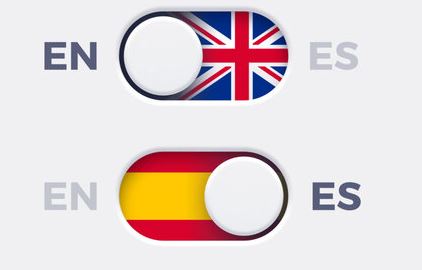

Localization Isn’t Translation: It’s Market Alignment
Translation deals with words. Localization deals with meaning, intent, and audience expectations.
True website localization for the Spanish market requires adapting content to the cultural, linguistic, and regional habits of the Spanish-speaking world. This includes:
Contextual rewriting, not sentence-level translation
Adjusting tone and communication style for regional dialects
Replacing culturally irrelevant references with region-specific ones
Redesigning UX elements to suit Spanish browsing patterns
Localizing SEO elements such as slugs, metadata, and internal anchor text
Even colors, symbols, and imagery may need change depending on whether you target Spain, Mexico, Colombia, or U.S. Hispanics. Localization ensures your website feels native, which boosts trust and improves conversion rates across Spanish-speaking audiences.
Spanish Keyword Research Must Be Built from Scratch
Many marketers still run English keywords through machine translation tools and assume the job is done. Spanish search behavior doesn’t work that way.
Consider these real differences:
“Website localization company” often maps to “empresa de localización web” in Spain, but “compañía de localización web” pulls stronger U.S. Hispanic results.
“Technical translation” shifts between “traducción técnica” and “traducciones técnicas” depending on country and audience intent.
“Marketing localization” may use “localización de marketing” in Spain but “adaptación de contenido de marketing” in LATAM.
A strong keyword strategy requires:
- Spain-specific keyword clusters
- Spanish keyword variants for the U.S.
- Neutral Spanish keyword sets for broad reach
- Hybrid bilingual phrases (very powerful in U.S. Hispanic search)
- Region-specific long-tail keywords
- Spanish keywords aligned with Indian multilingual search patterns
This multi-layer structure signals authority across diverse markets and helps you rank in Spain, the U.S., Latin America, and India’s emerging Spanish-speaking communities.


Technical Localization Is Often the Silent Ranking Factor
The best Spanish content in the world won’t rank if the technical foundation is weak.
Search engines evaluate multilingual SEO using a combination of technical, structural, and semantic signals.
a. Hreflang Mapping for All Spanish Variants
Correct implementation includes:
es-es (Spain)
es-us (U.S. Hispanic)
es-mx (Mexico)
es-419 (Latin America)
en-us, en-in
Indian language alternates for Spanish learners
This eliminates duplicate content problems and ensures the right Spanish version appears in the right region.
b. Spanish Metadata Optimization
Your meta titles, descriptions, JSON-LD, alt-text, and open graph tags should be fully localized, not translated.
Search engines prioritize regionally relevant Spanish metadata, especially for mobile results.
c. Core Web Vitals for Spanish Markets
Spanish SERPs favor websites with:
Fast First Input Delay (INP)
Stable layout during scroll (CLS)
Strong Largest Contentful Paint (LCP)
Mobile-first rendering with Spanish content
Spanish alt tags for all images and media
Technical optimization improves rankings across Spain, U.S. Hispanic markets, and Latin American search engines that rely heavily on Google’s algorithmic signals.
Cultural Localization Drives Engagement and Trust
Spanish-speaking users expect brands to adapt to their cultural norms.
What Spanish Users Respond Well To:
Warm, approachable copy
Benefit-driven CTAs
Examples grounded in local life
Spanish idioms, but only region-appropriate ones
Clear pricing and support information
Spanish customer service pages
If you’re targeting Spain, keep content aligned with Iberian Spanish grammar and vocabulary.
If your focus is the U.S. Hispanic population, use more neutral Spanish mixed with common English loanwords.
For Latin America, use simplified Spanish tailored to a broader audience.
Culture-first localization leads to significantly higher dwell times, lower bounce rates, and stronger conversion intent.


Multilingual SEO Across India, U.S., and Spain
India is emerging as a surprising hub for Spanish learners and bilingual search behavior.
Optimizing content with multilingual pathways such as:
English → Spanish
Hindi → Spanish
Tamil → Spanish
Telugu → Spanish
Bengali → Spanish
Marathi → Spanish
Malayalam → Spanish
Kannada → Spanish
Urdu → Spanish
creates a multilingual SEO structure that expands your visibility on search engines, LLMs, and AI overview ecosystems. These language pairs are especially powerful for education, SaaS, e-commerce, and international services websites.
This also positions your site to appear more frequently in LLM responses, since cross-language authority is a major factor in AI retrieval ranking.
Spanish-Friendly URLs Strengthen Rankings
URL structures optimized for Spanish search behavior contribute significantly to rankings.
Best Practices:
Use lowercase Spanish slugs
Remove filler words
Avoid English leftover terms
Maintain consistent hyphenation
Prevent UTM and session ID pollution
Example of optimized URLs:
/localizacion-web-espana/
/servicios-de-traduccion-espanol/
/ingles-a-espanol-localizacion/
Clean URLs make indexing easier for both traditional search engines and LLM-based vector retrieval systems


AI-Driven Localization Is Now a Core SEO Advantage
Modern algorithms from search engines and AI models rely on:
Semantic density
Entity-based optimization
Topic clusters
Chunking with clear Spanish headings
Bilingual embeddings
Spanish keyword variety
Structured JSON-LD
When your website provides detailed, entity-rich, Spanish-optimized content, AI systems index it more reliably.
This increases visibility not only in Google but in:
AI Overviews
ChatGPT responses
Gemini search
Meta AI
Other LLM retrieval pipelines
In short: localized Spanish content equals algorithmic relevance.
Trust Signals Matter Even More in Spanish Markets
Spanish-speaking users rely heavily on credibility indicators before engaging with a brand.
Key trust-builders include:
Localized Spanish testimonials
Region-specific certifications
Spanish FAQs
Local case studies
Spanish customer support info
Country-specific payment and delivery details
Spanish-language compliance documents
A site that looks professional, localized, and culturally aware earns higher engagement and conversion rates across Spain and Latin America.


Practical Use Cases Where Spanish Localization Delivers ROI
Use Case 1: E-commerce Growth in Spain
Brands expanding into Spain saw conversion increases of 40 to 70 percent after localizing product descriptions, Spanish checkout flows, and Spanish customer support content.
Use Case 2: SaaS Platforms Entering U.S. Hispanic Markets
Spanish dashboards, localized onboarding, and bilingual support pages dramatically improved user adoption and retention.
Use Case 3: B2B Expansion Across Europe and LATAM
Localized landing pages and Spanish technical documentation strengthened B2B lead generation and outranked English-only competitors.
Use Case 4: Education & Learning Platforms
Bilingual content in English and Spanish boosted search visibility in India, Spain, and Latin America simultaneously.
Localize to Dominate in Spanish Expanding Market
If your goal is to dominate the Spanish-speaking digital landscape, simple translation won’t get you there.
You need a deep, region-optimized English-to-Spanish localization strategy that incorporates:
Cultural fluency
Multilingual SEO
Spanish keyword engineering
Technical optimization
Trust-based Spanish content
AI-friendly architecture
Big agencies hide these details to protect their margins.
You now have every secret they won’t tell you.
Get Your Urgent Translation Now → [Upload Your File / Get a Quote]
Request a Free Quote Today | 24/7 Availability | Serving Pan-India | Certified Translators & Localization Experts