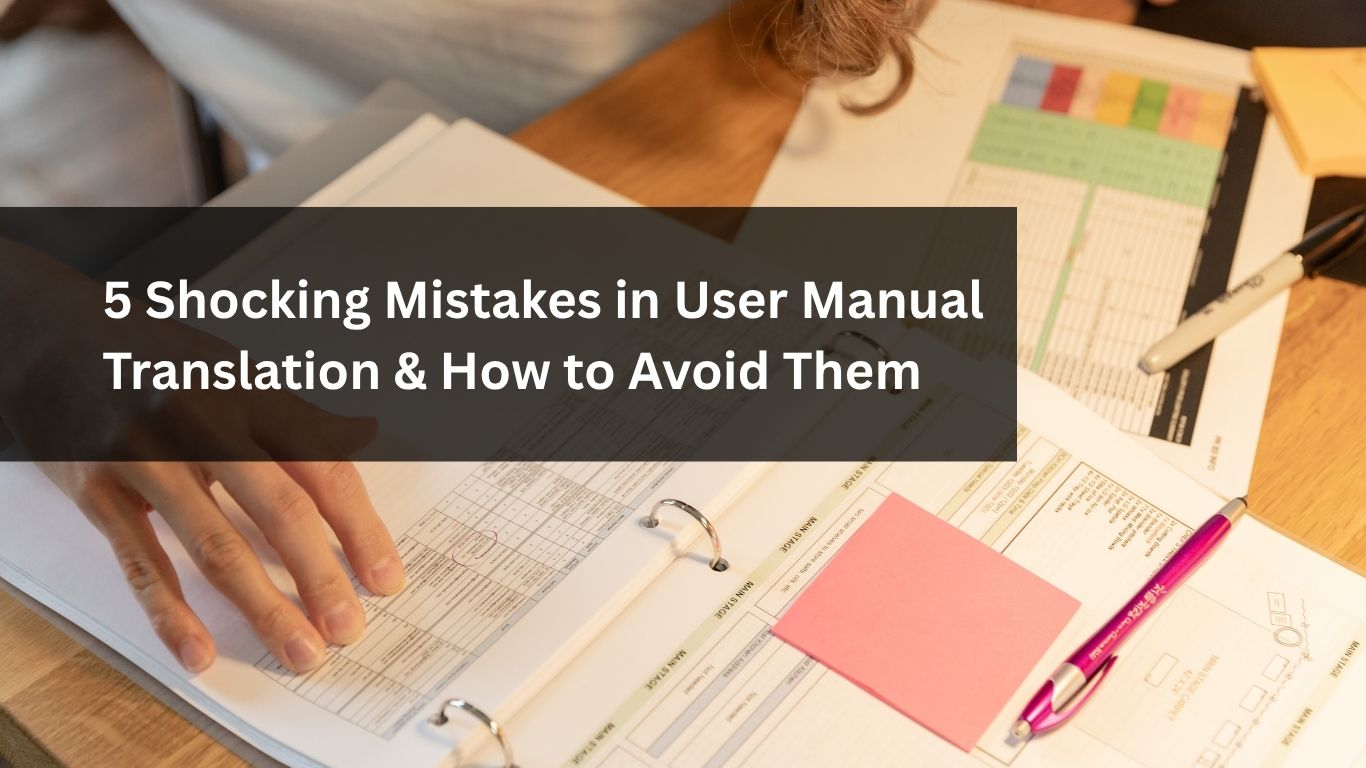
5 Shocking Mistakes Companies Make in User Manual Translation (And How to Avoid Them)
Unlock Multilingual Communication with Accurate Translation Services
Why User Manual Translation Matters More Than You Think ?
Imagine launching a new industrial machine, a software product, or a medical device across multiple countries. You’ve invested in marketing, R&D, and logistics—but there’s one thing that can destroy your brand credibility overnight: a poorly translated user manual.
User manuals are more than instructions—they are safety guides, compliance documents, and customer experience tools. A small translation error can lead to:
Misuse of machinery or devices
Regulatory violations and penalties
Product recalls
Loss of customer trust and reputation
In this blog, we expose 5 shocking mistakes companies make in user manual translation and show exactly how to avoid them, so your manuals are accurate, professional, and globally compliant.


Mistake 1: Ignoring Cultural and Linguistic Nuances
Many companies think translation is simply word-for-word conversion, but language is nuanced. Even technically correct instructions can confuse users or appear unprofessional if cultural context is ignored.
Why It Happens
Using generic translation services without local expertise
Ignoring region-specific terms, units, or symbols
Over-relying on machine translation without human review
Risks
Misinterpretation of safety instructions
Customer frustration and negative reviews
Potential legal consequences in regulated industries
How to Avoid It
Hire native translators with subject-matter expertise
Conduct cultural and technical adaptation reviews
Localize units, date formats, symbols, and idioms
Example: Translating “press the red button” in Japan may require color-specific safety conventions
Mistake 2: Failing to Maintain Technical Accuracy
User manuals for industrial machines, software, medical devices, or electronics contain highly technical information. Translating without understanding the subject can lead to catastrophic errors.
Why It Happens
Translators lack technical expertise
No review by subject-matter experts (SMEs)
Over-reliance on AI or automated tools without human post-editing
Risks
Incorrect assembly, operation, or safety procedures
Product malfunction or accidents
Non-compliance with international standards (ISO, IEC, FDA, MDR)
How to Avoid It
Use SME-reviewed translations
Combine AI-assisted translation with human post-editing
Maintain a glossary of technical terms for consistency
Example: Translating medical device instructions requires understanding terms like “invasive” or “sterilization,” not just literal translation

Mistake 3: Ignoring File Formats and Layout Integrity
It’s not just about words—how content is displayed matters. Many companies translate manuals but fail to preserve layout, diagrams, or formatting, causing confusion and extra costs.
Why It Happens
Translators focus on text, ignoring DTP (Desktop Publishing)
Complex file types like PDF, InDesign, CAD, or XML require special tools
Poor collaboration between translators and designers
Risks
Misaligned diagrams and tables
Lost technical information
Unprofessional-looking manuals that reduce trust
How to Avoid It
Use DTP tools like Adobe FrameMaker, Illustrator, or InDesign
Collaborate closely between translators, designers, and QA teams
Ensure multi-format compatibility: PDF, Word, Excel, CAD, PowerPoint
Example: A translated circuit diagram with shifted labels could render the manual useless for engineers
Mistake 4: Skipping QA and Proofreading
Even experienced translators can make mistakes. Skipping QA and proofreading is a common—and costly—mistake.
Why It Happens
Tight deadlines
Budget constraints
Overconfidence in translation tools
Risks
Typos in safety instructions
Inconsistent terminology across pages or languages
User frustration and legal liability
How to Avoid It
Conduct multi-layer proofreading: linguistic, technical, and regulatory
Use QA tools like QA Distiller to catch formatting or spelling errors
Test translated manuals with sample users when possible
Example: A small typo in dosage instructions for a medical device could have serious consequences

Mistake 5: Underestimating Importance of Safety
Different countries have different regulatory standards. Failing to comply can block your product from entering the market or expose your company to penalties.
Why It Happens
Translators unaware of industry regulations
No collaboration with compliance experts
Assuming a literal translation is sufficient
Risks
Fines or product recalls
Rejection of manuals by authorities
Brand damage and lost revenue
How to Avoid It
Hire ISO-certified translators familiar with international standards
Collaborate with legal and compliance teams
Include regulatory terms and disclaimers correctly in all languages
Example: Medical devices must comply with MDR in Europe, FDA in the US, and ISO 13485 globally
Bonus Tips: How to Make Your Manuals Flawless
- Standardize Terminology: Maintain a company glossary to ensure consistency.
- Leverage AI Wisely: Combine machine translation with human expertise.
- Test With Target Users: Validate comprehension across languages.
- Update Manuals Regularly: Ensure translations match product updates.
- Prioritize User Experience: Clear headings, bullet points, diagrams, and step-by-step instructions improve usability.
Conclusion:
Avoid These Mistakes or Pay the Price
User manual translation is high-stakes work. From manufacturing to healthcare, a single error can cost millions, damage your brand, or endanger lives. By avoiding these 5 shocking mistakes—ignoring culture, neglecting technical accuracy, skipping formatting, skipping QA, and overlooking compliance—you ensure your manuals are:
Accurate and ISO-compliant
Clear and culturally adapted
Ready for global distribution
Investing in professional, AI-assisted, human-reviewed translations is not just smart—it’s essential for safety, compliance, and customer trust. Don’t let errors in your manuals ruin your product launch.